
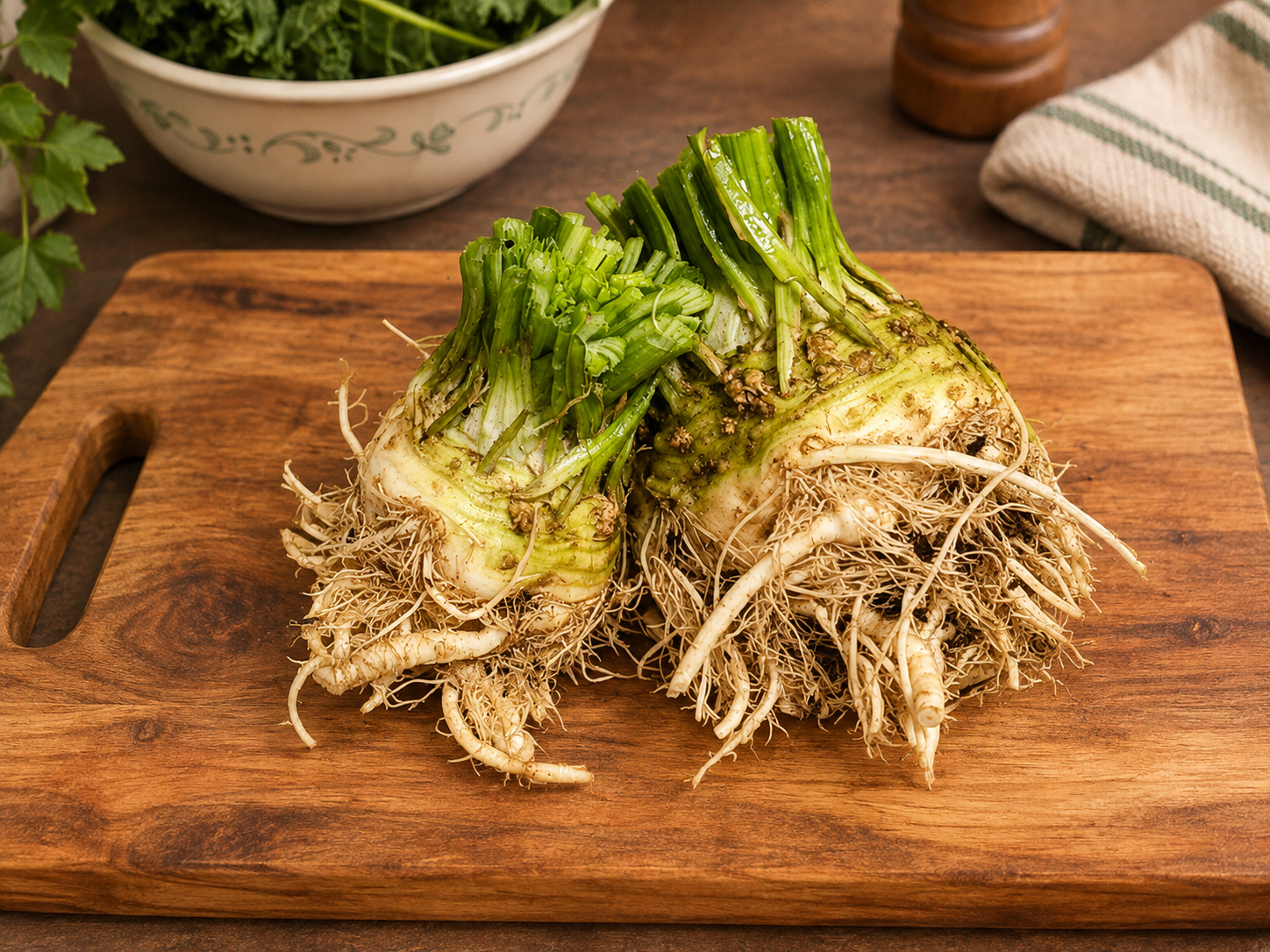
Celeriac
Celeriac | Earthy Nourishment from the Autumn Garden
Celeriac (Apium graveolens var. rapaceum) is a variety of celery cultivated for its enlarged, knobby stem base rather than its stalks. Beneath its rugged exterior is a pale, fragrant interior with a distinctive flavor somewhere between celery, parsley, and a mildly sweet root vegetable.
Ayurvedic Perspective
Celeriac is not commonly described as a distinct food in classical Ayurvedic texts, so its qualities can be considered through its taste, texture, preparation, and digestive effects. Its mildly sweet, aromatic, and slightly bitter character offers a combination of nourishment and lightness.
Cooked until tender in soups or stews with a little ghee and digestive spices, celeriac becomes soft, moist, and grounding, making it especially supportive of Vata. Its aromatic character can complement Kapha-conscious meals, particularly when roasted or paired with warming spices. For Pitta, a gently cooked preparation with coriander and fennel can be pleasant without highly pungent seasonings. These doshic effects depend on preparation and individual digestion rather than constituting a classical classification specific to celeriac.
Western Nutrition Perspective
Celeriac contributes dietary fiber, vitamin K, vitamin C, phosphorus, and potassium. Fiber supports digestive health, while its comparatively modest carbohydrate content can make celeriac a useful alternative to potatoes in certain dishes. It also provides plant compounds with antioxidant activity and adds variety to a vegetable-rich diet.
JenZen Kitchen Wisdom
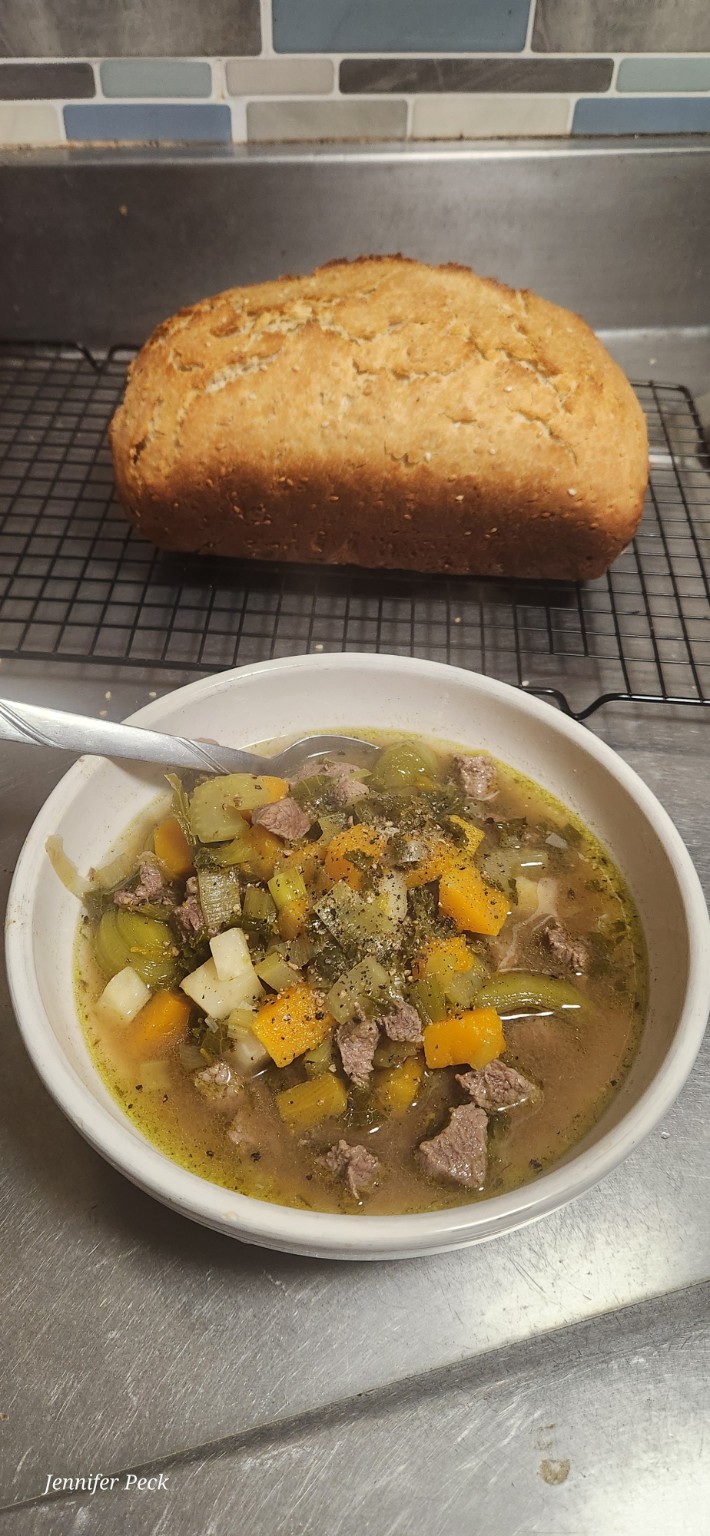
I grew celeriac in my garden this year, and while my harvest wasn't particularly impressive in size, the flavor certainly made up for it! One of my favorite discoveries has been how beautifully celeriac softens in soup. In a recent beef and butternut squash soup, it became almost creamy, practically melting in my mouth alongside the sweet squash. A vegetable doesn't need to be especially large or beautiful to bring something wonderful to the table.
Storage
Remove the leafy tops, leaving a short stem, and store unwashed celeriac in a loosely closed produce bag in the refrigerator crisper. Under good conditions it can keep for several weeks. A cool, humid root cellar can provide longer storage.
Preparation
Scrub away soil, trim the roots, and cut away the thick, rough exterior with a sharp knife. Dice for soup, roast in wedges, mash with potatoes, or simmer and purée. Wash the leafy tops thoroughly and use them to flavor homemade broths, soups, and stocks much like celery leaves.
Preservation
Blanch and freeze pieces of celeriac for cooked dishes, or freeze cooked celeriac purée. The leafy tops can be dehydrated, crumbled, and stored in an airtight jar for soups, seasoning blends, or vegetable broth mixes. Make sure they are completely dry before storing.
Ways to Use an Abundance
Pair celeriac with leeks, celery, parsnips, potatoes, butternut squash, apples, sage, coriander, cumin, or fennel. Enjoy it in brothy stews, creamy purées, roasted root medleys, and hearty autumn soups.
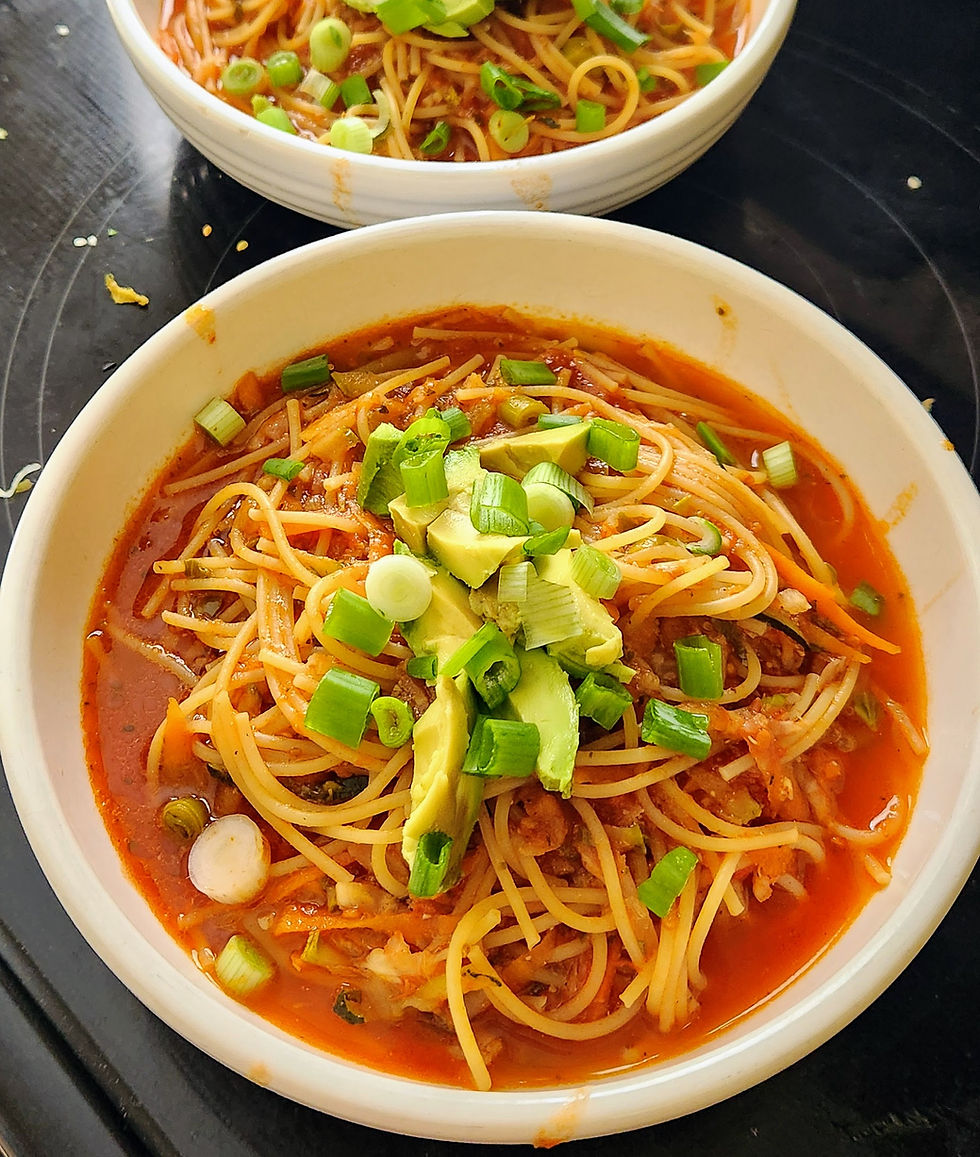
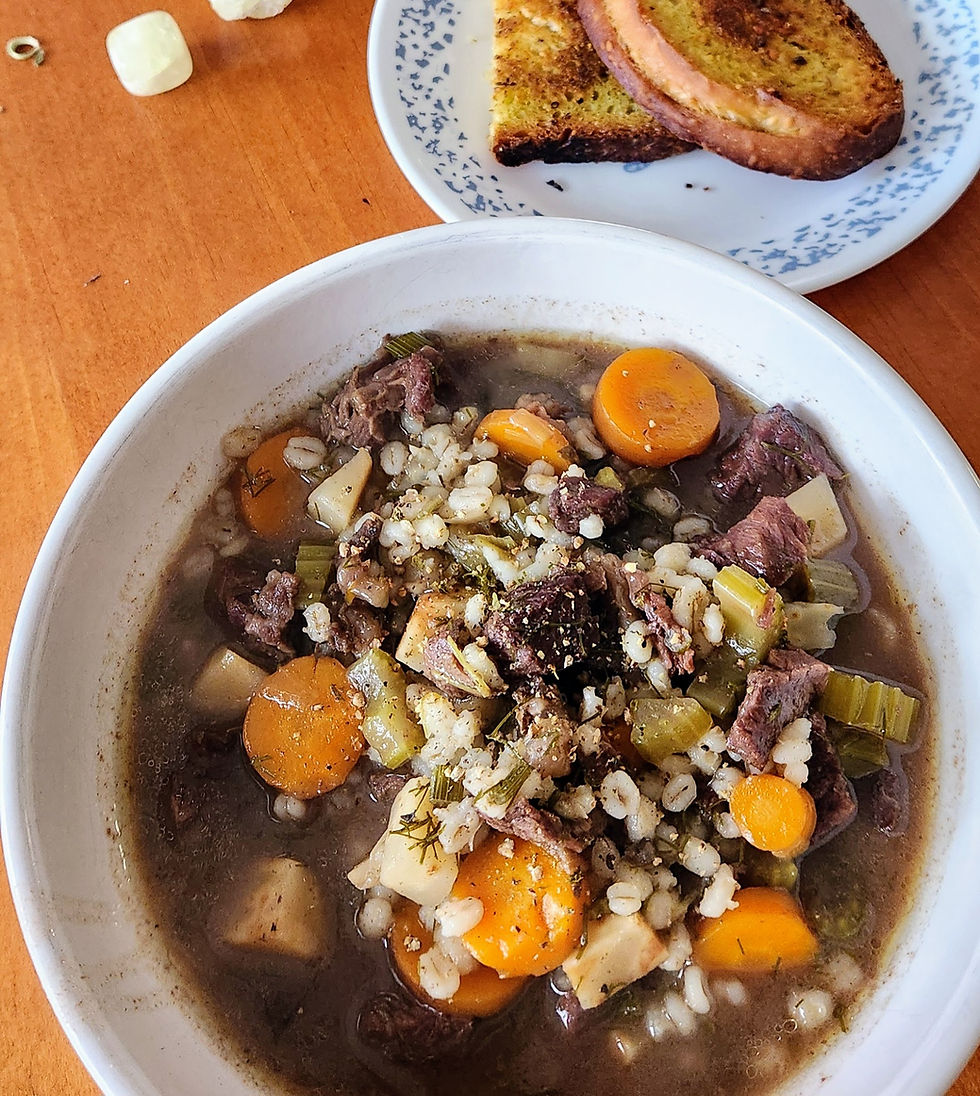
Explore recipes with
Celeriac


How This Food Supports the Body
These functional categories highlight the primary ways this food or herb supports balance in the body. In Ayurveda, foods are not only nourishment — they also have specific actions that can influence digestion, the nervous system, hormones, immunity, and more.