
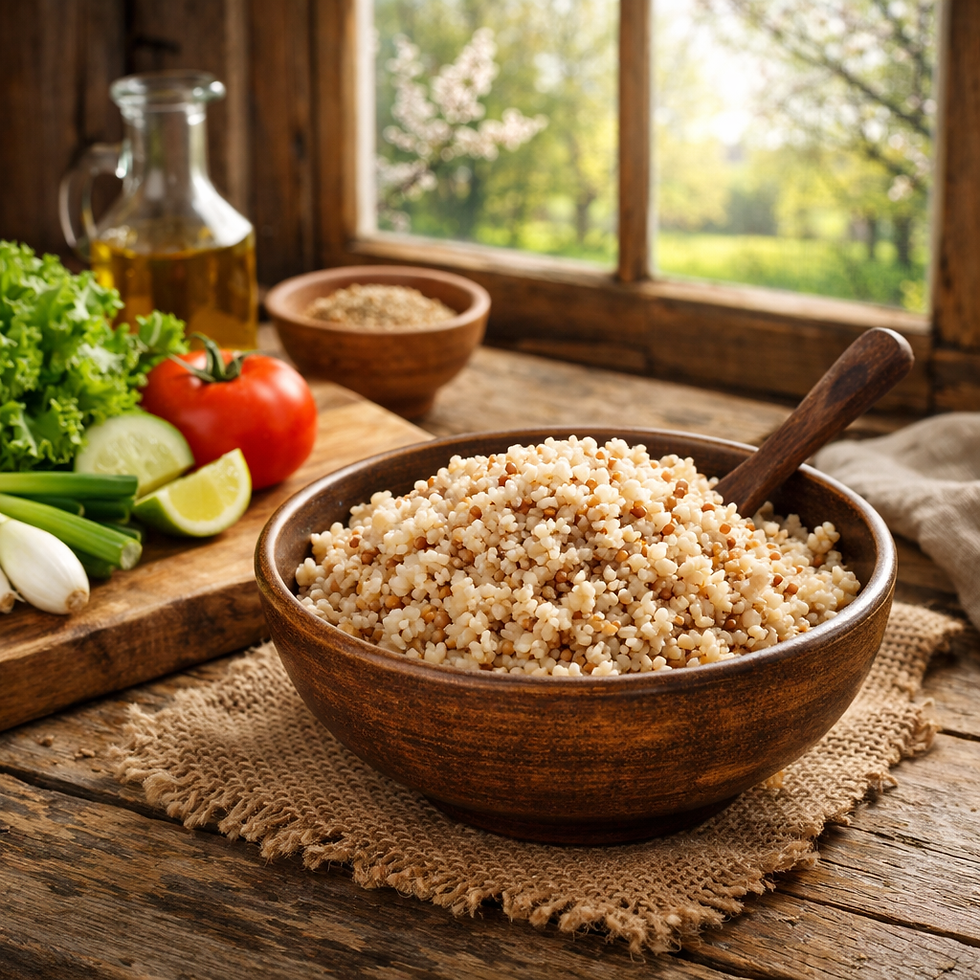
Sorghum
Sorghum: The Drying Grain of Spring Renewal
Sorghum is gently sweet with a subtle astringent finish, and it carries naturally light and dry qualities. That combination is exactly why it tends to feel so good in spring, when the body can feel heavier, more sluggish, or a little “water-logged.” It’s a beautiful grain for Kapha, and it’s generally supportive for Pitta as well.
Because sorghum is naturally drying, the way you prepare it matters. Soaking helps soften the grain and makes it easier to digest, and cooking it fully keeps it from feeling too rough. Adding ghee and warming spices helps it land better in the body — especially for anyone who runs dry, light, or sensitive.
Soak + cook basics (best for digestion):
Soak: 6–8 hours (or overnight)
Rinse well
Cook: 1 cup sorghum + 3 cups water
Simmer: 45–60 minutes, until tender/chewy
Rest: 5–10 minutes covered, then fluff
Uses in the kitchen:
A rice-like base for roasted vegetables + sautéed greens
Cooked softer into a warm breakfast porridge with stewed apples/pears
Tossed into soups for extra texture and staying power
A simple grain salad (best served slightly warm) with herbs + lemon
From a modern nutrition lens, sorghum is naturally gluten-free and offers fiber and steady energy. It tends to be most balancing when it’s soaked, well-cooked, and paired with moisture (like ghee or broth) and spices that keep digestion strong.
Storage
Store whole dry sorghum in an airtight container in a cool, dark pantry. For longer storage, refrigerate or freeze it. Sorghum flour becomes rancid more quickly than the intact grain and keeps best refrigerated or frozen.
Preparation
Rinse the grain, then soak it for several hours or overnight if time allows. Simmer in plenty of water until tender, usually forty-five to sixty minutes, and drain any excess. Sorghum is naturally firm and chewy; cooking it in broth and finishing with ghee or dressing makes it less dry.
Preservation
Freeze cooked sorghum in one- or two-cup portions for fast meals. Spread the grain on a tray to cool before packing so it does not freeze into one solid block. Sorghum flour can be frozen directly in an airtight container.
Ways to Use It
Use cooked sorghum in warm grain bowls, pilaf, soup, hearty salad, or breakfast porridge. Pair it with roasted roots, greens, chickpeas, bone broth, cumin, coriander, fennel, ginger, tahini, and lemon. Its light, dry qualities are Kapha-friendly; Vata generally benefits from extra moisture and fat.
Explore recipes with
Sorghum


How This Food Supports the Body
These functional categories highlight the primary ways this food or herb supports balance in the body. In Ayurveda, foods are not only nourishment — they also have specific actions that can influence digestion, the nervous system, hormones, immunity, and more.