
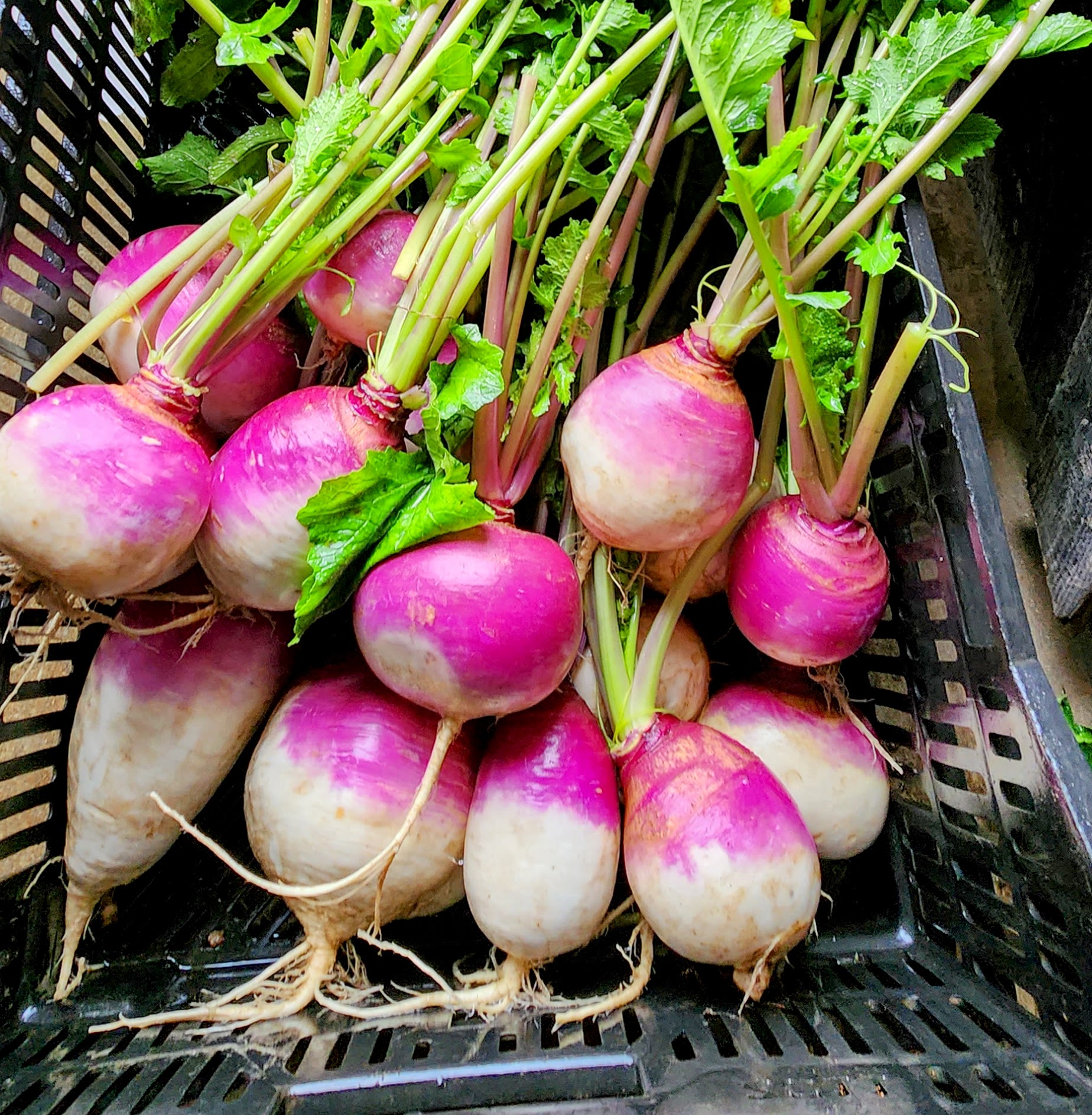
Purple Top Turnip
Purple Top Turnips: A Fall Harvest from Root to Leaf
A Fall Turnip, Root to Leaf
Purple Top turnips are cool-season roots with a rosy-purple shoulder, creamy white flesh, and edible leafy tops. They are a familiar fall harvest, useful both as a tender root vegetable and as a savory green.
Ayurvedic Perspective
Turnips are best considered here through their qualities and preparation rather than as a fixed classical prescription. The root has a lightly sweet taste with pungent and bitter edges; it is firm and somewhat cooling before cooking. Roasting, braising, or simmering until tender brings out sweetness and softens its firmer, drier qualities.
Raw or undercooked turnip may feel rough or harder to digest, especially when Vata is elevated or digestion is sensitive. Cook it well with ghee or oil and aromatic spices such as cumin, coriander, fennel, or ginger. Its lightness and pungent-bitter notes may suit Kapha, while Pitta can keep the seasoning moderate. Portion, season, digestive strength, and the rest of the meal all matter.
Modern Nourishment
Turnip roots provide fiber, vitamin C, and potassium. The leafy tops are edible too and add another green vegetable to the meal. Using both root and greens makes the most of the harvest.
From My Garden
I planted Purple Top turnips on August 7, 2026, thinned the seedlings, and watched the roots swell through the fall. On October 11 I pulled my first ones, with generous leafy tops and roots around two to three inches wide. I roasted the turnip with cauliflower and served it with braised bok choy and chicken seasoned with coriander, cumin, fennel, oregano, and rosemary.
This was my first Purple Top harvest from Mimi’s Healing Garden. Seeing the roots develop after weeks of tending made this autumn dinner feel especially satisfying.
JenZen Kitchen Note
Roasting gave the turnip a mellow, gently sweet flavor that paired beautifully with cauliflower. Don’t overlook the greens: separate them from the roots when you bring the harvest inside, then cook them as a savory side or add them to soup.
Using Purple Top Turnips
Choosing & Harvesting
Harvest turnips when they reach a useful size, often around two to three inches across. Young roots tend to be tender; very large roots are more likely to become strong-flavored, woody, or fibrous. The leafy tops are edible, and they can also be gathered while thinning a crowded row.
Storage
Cut the greens away from the roots soon after harvest so the leaves do not draw moisture from the roots. Refrigerate the roots and greens separately and use them within about a week or two.
Preparation
Scrub the roots and trim the stem and tail. Peel only if the skin is tough. Cut into similar-size pieces and roast, sauté, braise, or simmer until tender. Cook the greens separately until softened; their savory, slightly bitter character complements the mellow root.
A Simple Pairing
For a practical Ayurvedic-inspired plate, pair roasted turnips with ghee and aromatic spices, then add a bitter or tender green. This is a qualities-based kitchen suggestion, not a fixed classical formula.
Turnip Pairings
Balancing Kitchen Combinations
Purple Top turnips + ghee + cumin, coriander, fennel, or ginger: cooking softens the root while aromatic spices add warmth.
Purple Top turnips + cauliflower + leafy greens: roast the roots and cauliflower, then serve with a gently cooked green for varied texture and flavor.
Seasonal Recipe
Try the existing Autumn Root Soup, which includes turnips alongside carrots, cabbage, and chard.
Explore recipes with
Purple Top Turnip

How This Food Supports the Body
These functional categories highlight the primary ways this food or herb supports balance in the body. In Ayurveda, foods are not only nourishment — they also have specific actions that can influence digestion, the nervous system, hormones, immunity, and more.