
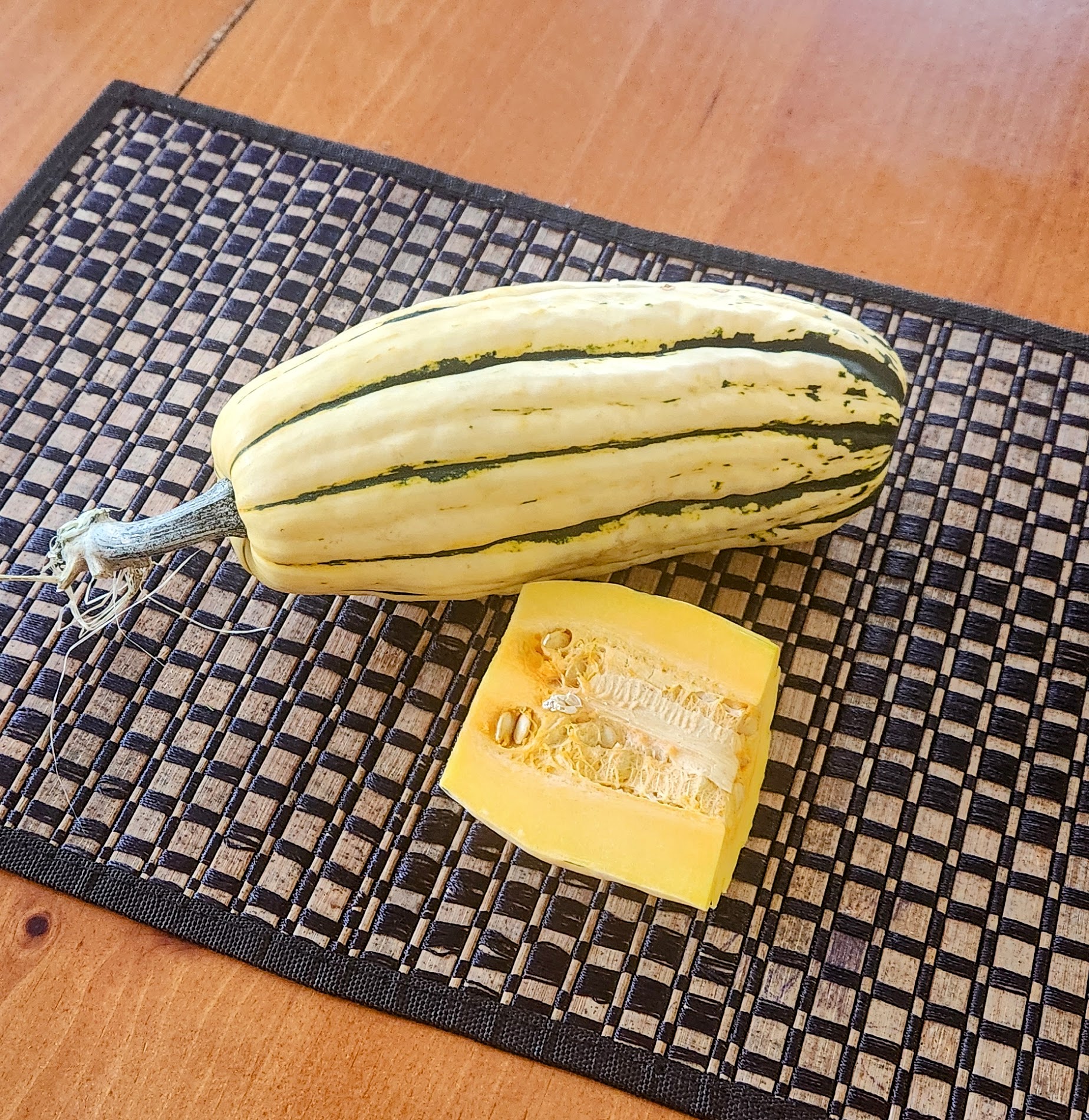
Delicata Squash
Delicata Squash: The Winter Squash You Don’t Have to Peel
Delicata squash is small, striped, sweet, and unusually practical. Its thin skin becomes tender when cooked, so there is no need to peel it. Slice it into rings, roast it in crescents, or use the hollowed halves as little bowls for grains, lentils, vegetables, or other seasonal fillings.
Its creamy golden flesh sits somewhere between the softness of butternut and the firmer texture of acorn squash. Because delicata cooks relatively quickly and comes in a naturally manageable size, it makes winter squash feel accessible even when cooking for one or two people.
Ayurvedic Perspective
Delicata squash does not have a widely documented classical Ayurvedic ruling of its own, so its energetics are best understood through a thoughtful assessment of its qualities. Cooked delicata is primarily sweet with a subtle astringent undertone. It becomes soft, substantial, smooth, and grounding, with the generally cooling tendency associated with sweet winter squash and an expected sweet post-digestive effect.
These qualities can be especially supportive for Vata when the squash is cooked until tender and prepared with ghee or oil and warming digestive spices. Its sweetness is generally gentle for Pitta, although the full meal, season, spices, and individual digestion still matter.
For Kapha or sluggish digestion, delicata is best enjoyed in a sensible portion and balanced with bitter greens, pungent spices, or lighter vegetables. Roasting brings out its sweetness and creates drier, caramelized edges; steaming makes it softer and more moist. Either method becomes easier to digest when the squash is thoroughly cooked rather than left firm.
Modern Nourishment
Delicata provides satisfying carbohydrates and fiber along with carotenoid pigments, potassium, and vitamin C. Its golden color reflects plant compounds associated with orange and yellow vegetables, while the edible skin contributes additional fiber and means less food waste.
Pairing delicata with eggs, lentils, beans, seeds, fish, poultry, or another protein turns it into a more complete meal. Bitter greens and aromatic vegetables add contrast to its natural sweetness.
In the Kitchen
Wash the skin well, cut the squash lengthwise or into rings, and scoop out the seeds. The seeds may be cleaned, seasoned, and roasted. The halves make beautiful edible bowls, while rings and crescents develop caramelized edges and cook more quickly.
Delicata welcomes both savory and gently sweet flavors. Coriander, cumin, cardamom, ginger, black pepper, fennel, thyme, sage, cinnamon, and nutmeg all work naturally with it. Ghee or olive oil adds richness, while arugula, kale, lemon, tahini, or chutney can bring brightness and contrast.
JenZen Kitchen Note
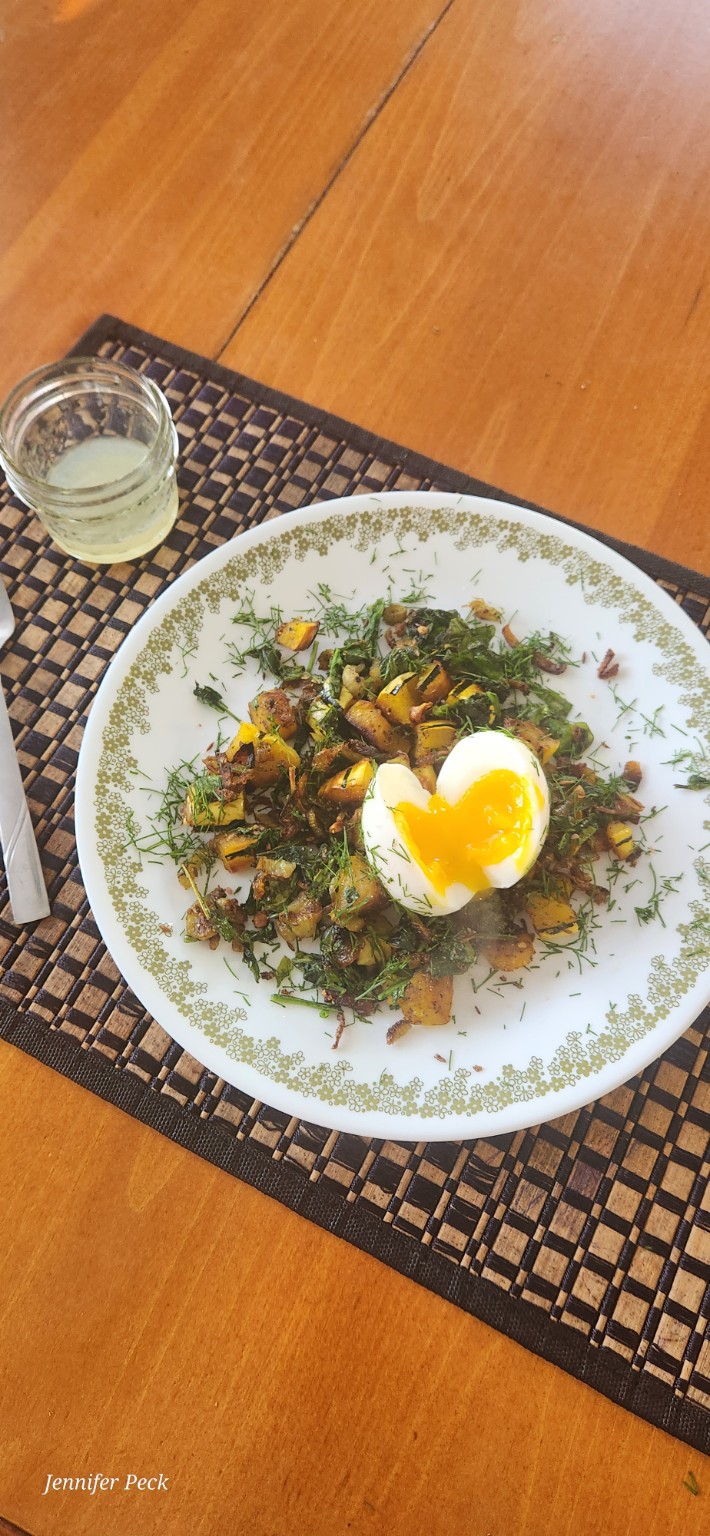
Delicata earned its place in my Living Food Guide while I was making breakfast. I roasted it with fennel and shallots, seasoned with coriander, cumin, cardamom, salt, and pepper, then stirred in arugula near the end and served it with a soft egg on top.
The meal began with the same flavor framework I had recently used with sweet potato, and that was exactly the point: seasonal ingredients are versatile. A recipe can be a framework rather than a rigid formula. When we understand how sweetness, spice, bitterness, richness, and texture work together, we can cook confidently with whatever the season provides.
Selecting & Storage
Choose delicata squash that feels firm and heavy for its size, with intact skin and no soft spots. Its cream-and-green striping may deepen toward yellow or orange as it matures.
Delicata has a thinner rind and generally does not keep as long as harder-skinned winter squashes. Store it whole in a cool, dry, well-ventilated place and check it regularly. Once cut, cover and refrigerate it; cooked squash should also be refrigerated promptly.
Preparation
Because the skin is edible, wash and dry the squash thoroughly before cutting. Slice it into rings or crescents for quick roasting, or halve it from stem to tip when you want to fill the cavity. Roast with ghee or oil until the flesh is completely tender and the edges begin to caramelize.
Why the Skin Matters
Leaving the tender skin in place saves preparation time, helps the slices hold their shape, adds texture and fiber, and allows more of the vegetable to be enjoyed. If a particular squash has unusually tough or blemished skin, individual sections can still be trimmed as needed.
Roasting the Seeds
Delicata seeds are edible, hull and all. Rinse away the stringy flesh and dry the seeds very well, then toss them with a small amount of melted ghee or oil, salt, and spices such as coriander and cumin. A tiny pinch of cardamom can echo the flavor of the squash. Roast at 325–350°F for about 10–15 minutes, stirring once and watching closely because the smaller seeds can brown quickly.
The roasted seeds add welcome crunch and make use of the whole squash. Through an Ayurvedic lens, seeds are generally oily, dense, and nourishing—qualities that can be grounding for Vata, while a modest portion is more appropriate for Kapha or slower digestion. Sprinkle them over roasted delicata, greens, soups, or grain bowls rather than treating them as an unlimited snack.
Balancing Kitchen Combinations
Delicata + ghee + coriander, cumin & cardamom
Ghee softens and enriches the squash while the aromatic spices bring warmth and help its sweet, dense qualities feel more digestively balanced.
Delicata + fennel + bitter greens
Fennel echoes the squash’s sweetness without making the dish cloying, while arugula or kale contributes bitter and pungent contrast.
Delicata + a soft egg
A softly cooked egg adds protein and richness, and the yolk becomes a natural sauce. Keeping the rest of the plate bright with greens and spices prevents the meal from feeling overly dense.
Delicata halves as edible bowls
Roasted halves can hold lentils, grains, sautéed vegetables, savory oats, or seasonal stuffing. This is an easy way to turn a side vegetable into the center of a nourishing meal.
Preservation
Cooked delicata may be frozen as roasted slices, cubes, or purée. Cool it fully, package it in useful portions, label, and freeze. Because its skin is tender and its storage life is shorter than some winter squashes, freezing cooked portions is a practical way to prevent waste.
Explore recipes with
Delicata Squash


How This Food Supports the Body
These functional categories highlight the primary ways this food or herb supports balance in the body. In Ayurveda, foods are not only nourishment — they also have specific actions that can influence digestion, the nervous system, hormones, immunity, and more.