
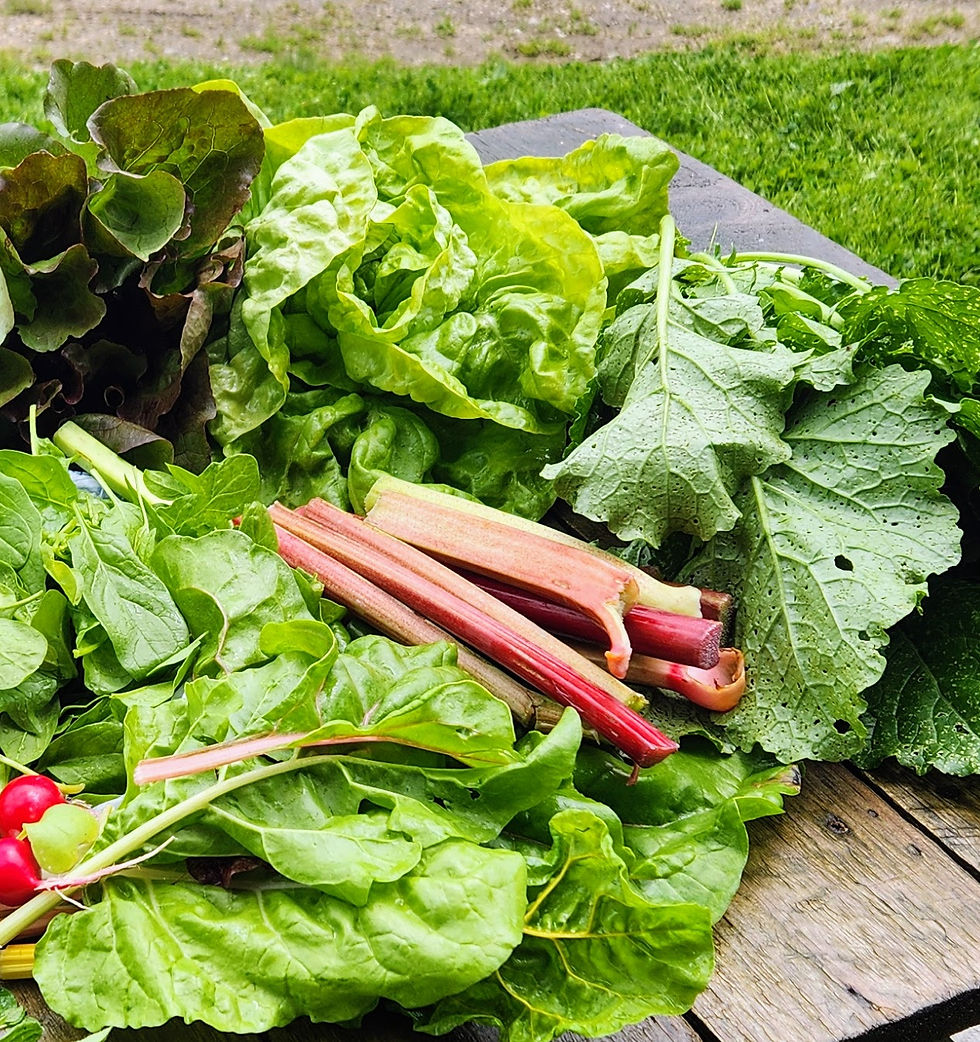
Rhubarb
Rhubarb: The Bright Tart Messenger of Spring
Rhubarb is one of the first dramatic flavors of the growing season — vibrant, tart, awakening, and unmistakably springlike. Its strongly sour and astringent taste, along with its light, dry, and sharp qualities, gives it an invigorating nature that can help cut through winter heaviness and stimulate digestion as the seasons shift. Rhubarb is especially reducing for excess Kapha, though its intensity can aggravate both Vata and Pitta if overused or eaten without balance.
Preparation matters tremendously with rhubarb. Raw rhubarb is intensely sour and quite sharp, while cooking softens its edges and transforms it into something comforting, nostalgic, and deeply seasonal. Traditionally paired with sweet ingredients, warming spices, fats, or fruits like strawberries, rhubarb becomes much more balanced and digestible when gently cooked. Cinnamon, ginger, cardamom, vanilla, orange, maple, honey, or ghee all pair beautifully with its naturally tart personality.
Although rhubarb is most famous in pies and desserts, it also works surprisingly well in savory cooking. It can be simmered into chutneys, spooned over roasted vegetables, paired with lentils, added to sauces, or used to brighten rich meals. Its tartness naturally cuts heaviness and adds complexity to spring and early summer dishes.
Nutritionally, rhubarb contains fiber, antioxidants, and vitamin K while remaining relatively low in sugar on its own. Because rhubarb leaves contain naturally occurring oxalates at unsafe levels, only the stalks should be consumed. The stalks themselves are perfectly edible when properly prepared and enjoyed in moderation.
Storage
Fresh rhubarb stores best:
Wrapped loosely in the refrigerator
In a produce drawer or container with airflow
Unwashed until ready to use if storing longer
Trimmed stalks generally keep well for about 1–2 weeks refrigerated.
Avoid excessive trapped moisture which encourages spoilage.
Preparation
Wash and trim stalks before use
Discard leaves completely
Slice for pies, crisps, compotes, sauces, jams, or chutneys
Simmer gently with warming spices and sweeteners
Pair with strawberries, berries, apples, citrus, or ginger
Roast for concentrated flavor and softer texture
Cooking significantly mellows rhubarb’s sharpness and improves digestibility.
Preservation
Rhubarb preserves beautifully.
Freeze chopped raw rhubarb for baking and cooking
Freeze cooked compotes or sauces
Dehydrate for fruit blends or snacks
Make jams, chutneys, or preserves
Roast and freeze in portions
Rhubarb is one of the easiest spring foods to preserve for year-round use.
How to Use the Abundance
Bake into crisps, pies, muffins, or scones
Simmer into compotes for yogurt or oatmeal
Make rhubarb chutney with ginger and spices
Add to strawberry sauces and desserts
Roast with honey or maple syrup
Blend into mocktails or sparkling drinks
Spoon over pancakes or waffles
Add to savory grain bowls with goat cheese or herbs
Dehydrate into tart fruit snacks
Freeze for winter baking projects
Rhubarb’s tartness can also beautifully brighten creamy or rich foods.
Explore recipes with
Rhubarb
How This Food Supports the Body
These functional categories highlight the primary ways this food or herb supports balance in the body. In Ayurveda, foods are not only nourishment — they also have specific actions that can influence digestion, the nervous system, hormones, immunity, and more.