
When the Hips Begin to Speak: Gluteal Tendinopathy in Menopause
- Jennifer Peck

- Dec 6, 2025
- 8 min read
Updated: May 11

There are moments in the menopausal transition when the body speaks so clearly, so loudly, that you can no longer pretend you didn’t hear it. For me, one of those moments came as a deep ache in my right hip—sharp at times, tender at others, and undeniably persistent. At first, I brushed it off as overuse, a long day at the farm, or simply “getting older.”
But the more I listened, the more I realized this wasn’t random. This was gluteal tendinopathy, a condition many women experience in midlife, often without knowing its name. And in the context of menopause, it becomes more than a physical ailment—it becomes a messenger.
This blog explores the emotional, hormonal, and Ayurvedic threads woven into hip pain during menopause, and why so many women feel it just as their lives are shifting in profound ways.
What Is Gluteal Tendinopathy?
Gluteal tendinopathy is irritation or degeneration of the gluteus medius and minimus tendons—the stabilizing muscles on the outer hip. These tendons keep us balanced when we walk, stand on one leg, or carry weight. When they become inflamed, even simple activities like standing, climbing stairs, or lying on your side can become painful.
In menopause, these tendons are particularly vulnerable. A drop in estrogen affects collagen, elasticity, and tendon integrity, making the outer hip an easy target for pain.
Why It Shows Up in Menopause: The Hormonal Thread
Estrogen plays a quiet but powerful role in the health of our tendons and connective tissues. It keeps collagen pliable, supports natural repair processes, maintains joint lubrication, and helps regulate inflammation. As estrogen declines in menopause, the tendons of the outer hip often feel the shift first. They stiffen more easily, recover more slowly, and lose some of their natural elasticity. What many women describe as hip pain "out of nowhere" is often the body responding to this internal change—less lubrication, increased inflammation, and a subtle instability that becomes more noticeable with time.
This hormonal landscape explains why gluteal tendinopathy becomes such a common companion during the menopausal years, especially for women who are active, emotionally taxed, or carrying long-term stress. The decline is not the cause of the pain on its own, but it creates the conditions for vulnerability—much like a dry field that catches fire more easily.

The Ayurvedic View: Vata + Pitta in the Hips
Ayurveda gives us a deeper lens for understanding this pain—one that honors both physiology and energy. The menopausal transition is a naturally Vata-increasing time, and with it comes dryness, instability, and sensitivity in the tissues. When Vata rises in the hips, the tendons become more prone to degeneration and irritation. Pitta often joins the picture as inflammation or sharp, hot pain. Together, they create a pattern that mirrors gluteal tendinopathy perfectly: irritated tissues, inconsistent stability, heat, dryness, and tenderness that shifts from day to day.
The hips are governed by Apana Vayu, the downward-moving energy connected with grounding, boundaries, elimination, and emotional release. During menopause, Apana can become irregular or depleted, which means the hips begin to hold what hasn’t been expressed—stress, grief, fatigue, overextension, and unspoken truths. When this energy is disrupted, pain often emerges as a form of communication. Ayurveda teaches that the hips are one of the body’s greatest emotional storage sites, and menopause is one of the most potent times of emotional clearing.
The Emotional Body: What the Right Hip Represents
Energetically, the right side of the body carries themes of responsibility, action, outward effort, and the roles we take on for others. For many women, the right hip becomes a symbolic ledger—recording years of over-giving, holding everything together, absorbing stress, and swallowing emotions that never had the space to surface.
The right hip especially reflects the weight of suppressed boundaries and the times we’ve pushed through exhaustion because someone needed us. When pain emerges here, it often mirrors an emotional truth: something in our life has been heavy for too long. The physical sensation becomes a messenger for the mental and emotional layers beneath it, encouraging us to reevaluate where our energy is going and what needs to be released.
How the Body Speaks: My Personal Experience
I've lived with a whisper in my right hip for more than five years now—one of those sensations you notice, then brush aside, then eventually realize has been trying to get your attention all along. In the early years it would come and go, a dull ache after a long day at the farm or a sharp reminder when I moved a certain way. But as I’ve stepped more fully into the menopausal transition, that whisper has become louder, clearer, more insistent.
Some nights it wakes me from sleep—a deep ache on the outer right hip, as if the tendons are calling out before my mind is even awake enough to understand. There’s something about nighttime that seems to intensify it: the stillness, the weight of the day settling in, the way Vata rises and moves through the empty spaces of the body.
Instead of ignoring it, I’ve begun meeting it.
I’ve been working with a simple hip‑strengthening protocol—bridge pose, gentle side leg lifts, and controlled strengthening rather than stretching. And I have to say, it’s helping. Not in a dramatic, overnight way, but in a slow, steady strengthening that feels like rebuilding myself from the inside out.
I’ve also instinctively leaned into nourishment. More ghee. More bone broth. Warm, grounding meals. It’s as if my body knew that the dryness and instability of Vata needed oiling from the inside.


Abhyanga—my daily ritual—has become less of a routine and more of a conversation. I linger over the hips now, especially the right one, circling the joint, warming the tissues, letting the oil penetrate places that feel achy or fragile. It feels like care. Like listening. Like honoring a part of my body that has held so much.
This unfolding, this hip pain, doesn’t feel random anymore. It feels like a messenger, one that’s been waiting years for me to give it my full attention.
When it wakes me at night, my first instinct is frustration—the sharp, tired exhale of being pulled from sleep yet again. But almost immediately, something softens. I breathe into the hip. I shift positions. Sometimes I tuck a pillow between my knees for sweetness and support, as if cushioning the emotional weight as much as the physical discomfort.
I’ve noticed the pattern clearly now: the higher my stress levels, the more the hip speaks. The more my emotions swell, the louder the ache becomes. It mirrors me—my inner weather, my fluctuations, the stories I still carry.
There is a deep emotional thread woven into this pain. Responsibility. Over-giving. Suppressed boundaries. Moments when my voice has been quieted, or when I’ve swallowed emotions I didn’t feel ready to release. It’s all there, layered in the tissue.
And when it gets louder, it’s never just physical. It speaks on all levels—body, mind, and energy—asking me to pause, listen, and shift.
Gentle, Effective Support (Without Aggravating the Tendons)
Support for gluteal tendinopathy during menopause must be rooted in stability, nourishment, and kindness toward the tissues. Aggressive stretching—which many of us, including myself, instinctively turn to—often worsens the condition because the tendons are already irritated and unable to tolerate further pulling. Instead, slow and controlled strengthening invites the hips to regain their integrity.
Foundational movements like bridge pose and side leg lifts help rebuild the strength of the gluteus medius and minimus, allowing the tendons to experience healthier, more consistent load. Small, mindful repetitions throughout the week create far more progress than occasional long sessions. A daily five‑minute hip reset—gentle activation paired with breath—helps stabilize Vata and calm inflammation. Pelvic floor work complements this beautifully, especially for women experiencing both hip pain and menopausal pelvic changes; strengthening these inner support structures creates a more balanced foundation for the hips.
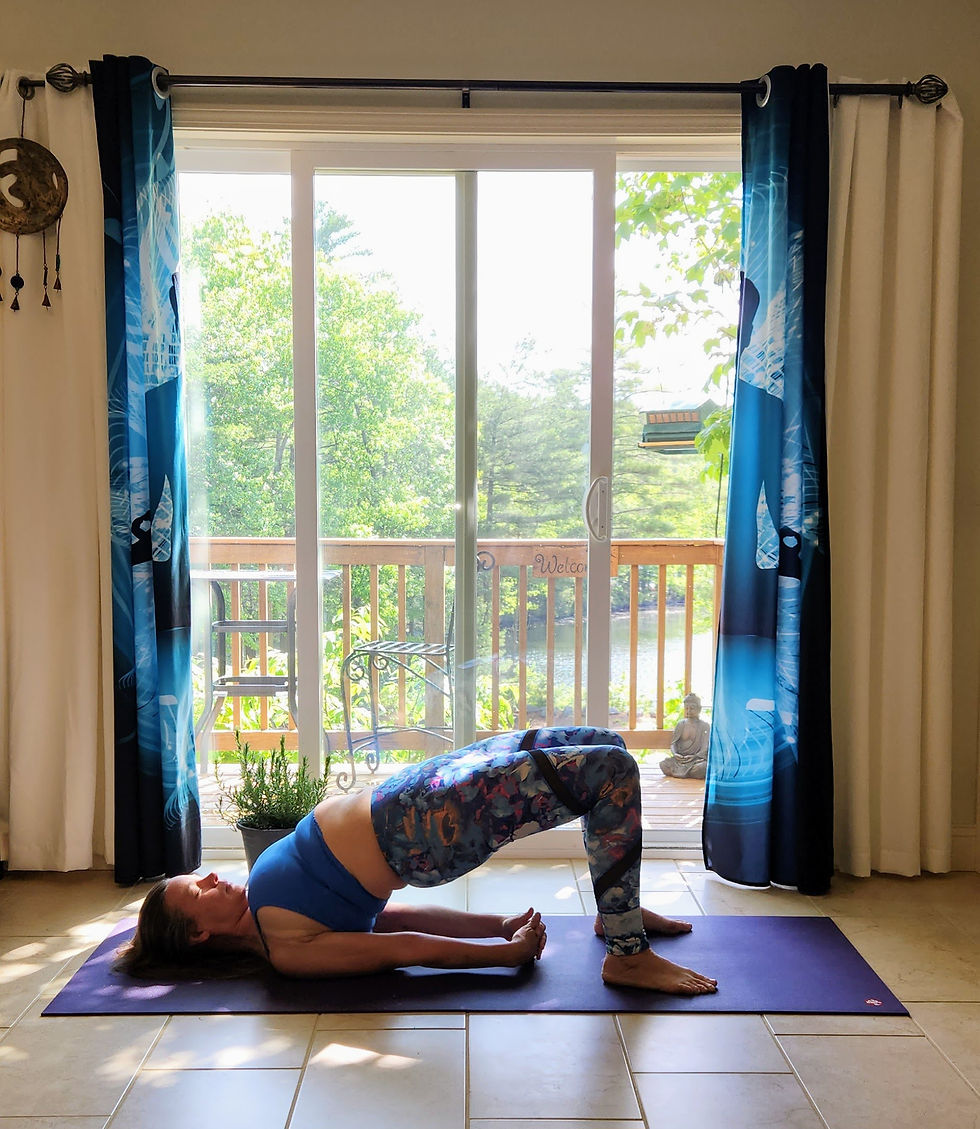
Nourishment becomes essential here as well. Ghee, bone broth, warm cooked foods, and oily, grounding meals replenish the dryness in the tissues.
Daily abhyanga—especially when the oil is worked intentionally around the hips—softens tension, increases circulation, and helps the body feel held rather than depleted. Herbs such as ashwagandha, shatavari, guduchi, and licorice may support inflammation, tissue repair, and Vata balance, while external oils like mahanarayan or sesame oil provide warmth and stability.
Heat is generally soothing when the hip feels tight or cold, while cooling the area may help when pain presents as sharp, hot, or inflamed—an intuitive dance between Pitta and Vata qualities.
Why Stretching Makes It Worse (And What To Do Instead)
Most women instinctively stretch when the outer hip feels tight, but for gluteal tendinopathy, this can aggravate the tendons further. Deep lunges, pigeon pose, or long-held outer-hip stretches place strain directly on the irritated attachment sites, increasing inflammation and prolonging recovery. The feeling of tightness often comes from weakness—not true shortness of the muscle—so stretching gives temporary relief but worsens the root issue.
Strengthening, on the other hand, provides stability. When the hip muscles learn to engage correctly, the irritation naturally settles. Movements that strengthen without compressing—such as controlled bridges, side-lying leg lifts, standing hip abduction with support, and gentle weight-bearing—invite the tendons to heal through balanced, steady load.
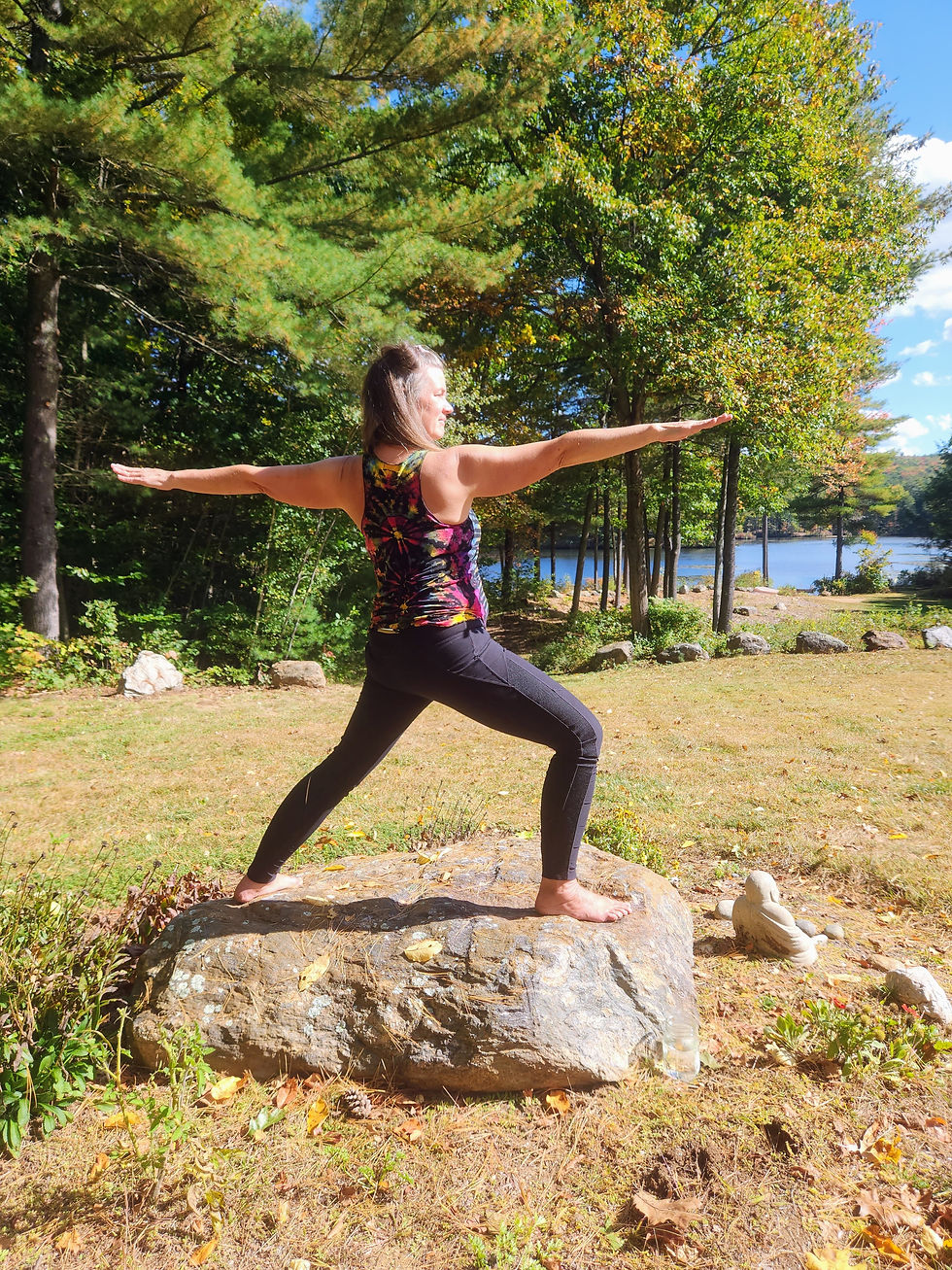
As the hips become more stable, poses that build functional strength—like Warrior II—can support the tendons even further. Warrior II strengthens the outer hips, legs, and deep stabilizing muscles, helping the gluteus medius and minimus learn to engage in a balanced, steady way. It cultivates grounding, boundaries, and a sense of inner strength, all of which beautifully complement the physical and emotional needs of menopausal hips.
When Hip Pain Is Actually a Call to Slow Down
Sometimes hip pain is less about biomechanics and more about the body insisting on stillness. When the mind pushes forward—taking on more, doing more, holding more—the hips may respond by forcing a pause. This is especially true in menopause, when the body is already undergoing a profound internal reorganization. The pain can become a boundary you never felt permission to set for yourself, an invitation to rest, to breathe, and to reassess the weight you are carrying.

Closing: The Hips as a Sacred Messenger in Menopause
The body never betrays us—it tells the truth long before the mind is ready to hear it. Hip pain, especially in the menopausal years, is rarely just a mechanical issue. It is a threshold. A place where old stories gather, where boundaries whisper for repair, where strength asks to be reclaimed from the inside out.
The hips teach us about grounding, about the exquisite intelligence of slowing down, about choosing ourselves after years of choosing everyone else. They remind us that healing is not linear; it is an unraveling, a remembering, a return to steadiness.
As you move through your own transition—whether guided by discomfort, intuition, or a longing for deeper balance—know that your body is not failing you. It is inviting you. Each sensation is a messenger, each ache a lantern, each awakening in the night a gentle nudge toward greater alignment with who you are becoming.
If you feel called to explore this journey more intentionally, to understand your body’s changing rhythms through the lens of Ayurveda, yoga, and nourishment, I would love to walk beside you. My Living Aligned program was created as a sanctuary for women in transition—a place to learn, soften, strengthen, and rediscover yourself with compassion and support.
Not as a prescription.
Not as a quick fix.
But as a pathway home.
May your hips guide you back to steady ground. May your body feel honored. May this season of life become a doorway to deeper wisdom and unwavering self-understanding.
With tender love and care,
Jennifer
As always, some of the herbal links in this blog are connected to my Banyan Botanicals affiliate partnership. Using these links is a simple way to support my work, writing, and the free educational content I create. Thank you for nourishing this space with your presence and support.


Comments