
.jpg)
Beets
Beets: Three Vegetables in One
Beets are one of the most generous plants in the garden. Beneath the soil grows the sweet, grounding root we recognize immediately, but above it are colorful stems and tender mineral-rich leaves that are every bit as useful in the kitchen.
I have come to think of the whole beet as nearly three vegetables disguised as one:
The root is sweet, dense, earthy, and grounding.
The stems are colorful, softly crisp, and gently sweet.
The leaves are tender, mineral-rich, and pleasantly bitter.
Chard gives us two vegetables in one, but apparently its beet cousin had to show off and give us three. 😆 This relationship is more than a kitchen resemblance. Beets and chard are different cultivated forms of the same plant species, Beta vulgaris. Chard was selected for its abundant leaves and stems, while beets were selected for their swollen roots.
In Ayurveda, beet roots are primarily sweet, substantial, moist, and heating, with subtle astringent and earthy-bitter qualities. Their sweetness and density make cooked beets especially grounding and nourishing for Vata, particularly during fall, winter, menstruation, or other times when the body feels depleted, dry, scattered, or unsteady.
Although beets are grounding, they are not necessarily cooling. Their heating energy and relationship with the blood mean that large or frequent portions may increase Pitta, especially during hot weather or when there is already excess internal heat. Summer preparations feel more balanced when beets are served in moderate portions and paired with cooling foods and herbs such as fennel, cilantro, mint, cucumber, pomegranate, coconut, tahini, coriander, or lime.

Their relationship with Kapha is nuanced. The heating and moving qualities of beets may help counter coldness and stagnation, but their sweetness and density can still feel heavy when digestion is sluggish. Roasting, sautéing, or simmering them with ginger, cumin, coriander, black pepper, mustard seed, garlic, or a little vinegar helps bring warmth and movement to the meal.
Preparation changes how beets meet the body. Raw grated beets are crisp, stimulating, and lighter, but their dense fibers may be difficult for Vata or sensitive digestion. Cooking softens the fibers, develops their sweetness, and makes them more comforting and accessible to agni. Ghee or olive oil adds moisture and richness, while spices help balance their earthy density.
Beets are traditionally associated with rasa dhatu, the plasma and lymph tissue, and rakta dhatu, the blood tissue. Their rich color and substantial nature have long connected them with blood nourishment, circulation, vitality, and support for the liver’s natural processes. They can be a meaningful part of a nourishing diet, but they are not a treatment for anemia, heavy menstrual bleeding, or liver disease.
From a Western nutritional perspective, beet roots provide folate, fiber, potassium, manganese, naturally occurring nitrates, and colorful antioxidant pigments called betalains. Although beets are often promoted as an iron-rich food, the roots contain only modest amounts of iron and vitamin C. Their nourishment becomes more complete when paired with foods such as lentils, chickpeas, tahini, seeds, eggs, meat, or other iron- and protein-containing ingredients.
The greens contribute their own fiber, minerals, potassium, vitamin K, and antioxidant plant compounds.
Tender beet leaves can be cooked exactly as you would chard, while the stems benefit from being chopped and started a few minutes earlier. They can be sautéed, added to soups, folded into eggs, simmered with beans, or used anywhere a tender celery-like vegetable would be welcome.
Nothing about this plant needs to be treated as scraps.
Beets became deeply personal for me during one summer harvest, when my garden, menstrual cycle, and intuition seemed to meet at exactly the right moment. I share that story more fully in Rooted & Radiant: Beet Medicine for Blood, Liver & Summer Balance.
Storage Tips
Remove the leaves soon after harvesting so they do not continue pulling moisture from the roots. Leave approximately one inch of stem attached and keep the long taproot intact.
For refrigerator storage, leave the roots unwashed and gently brush away loose soil. Place them in an open or perforated plastic produce bag in the high-humidity crisper drawer. Paper bags alone allow too much moisture to escape during longer storage and may cause the roots to become soft or rubbery.
If condensation develops inside the plastic bag, add a dry paper towel and replace it when damp. Check the beets periodically and remove any that begin softening or showing signs of decay.
Store the leaves and stems separately. Unwashed greens can be kept loosely wrapped in a clean towel or placed in a breathable produce bag. If washed first, dry them thoroughly before refrigerating. Beet greens are more perishable than the roots and are best cooked, blanched, or preserved within a few days.
Preservation Tips
Beets offer several dependable ways to preserve an abundant harvest.
For freezing, cook the roots until tender, cool them promptly, slip off the skins, and cut them into slices, cubes, or wedges. Freeze in meal-sized portions for soups, hashes, grain bowls, vegetable sautés, and roasted meals. Freezing them first in a single layer helps keep the pieces loose before transferring them into freezer bags or vacuum-sealed packages.
Cooked beet purée can also be frozen in small portions for soups, hummus, sauces, dressings, pancakes, savory cakes, and baking.
Plain beets are a low-acid vegetable and must be processed in a pressure canner for shelf-stable storage. They cannot safely be canned in a boiling-water bath without sufficient acidification.
Properly acidified pickled beets may be processed in a boiling-water canner when following a current research-tested recipe. Whole baby beets are especially beautiful for this. Refrigerator pickles provide more freedom to experiment with ginger, coriander, fennel, cardamom, dill, garlic, mustard seed, orange zest, onions, and other herbs, but creative untested recipes should remain refrigerated rather than stored at room temperature.
Cooked beets can also be sliced thinly and dehydrated until completely dry and brittle. Use the dried pieces in soups and stews, rehydrate them as a vegetable, or grind them into beet powder for broths, dressings, sauces, doughs, and natural color.
The leaves freeze best when blanched first. Separate thick stems from the leaves and give the stems slightly more blanching time. Cool everything promptly in ice water, drain thoroughly, and freeze in portions. The texture will soften, making the frozen greens ideal for soups, beans, eggs, pasta sauces, grain bowls, and vegetable sautés.
Another convenient option is to sauté the stems and greens before freezing. Portion the cooked mixture into small freezer packs that can be added directly to winter meals.
Beet leaves may also be dehydrated until crisp, then crumbled into soups and broths or ground into a mineral-rich green powder. The sturdier stems are generally more useful frozen, pickled, or cooked into meals.
How to Use the Abundance
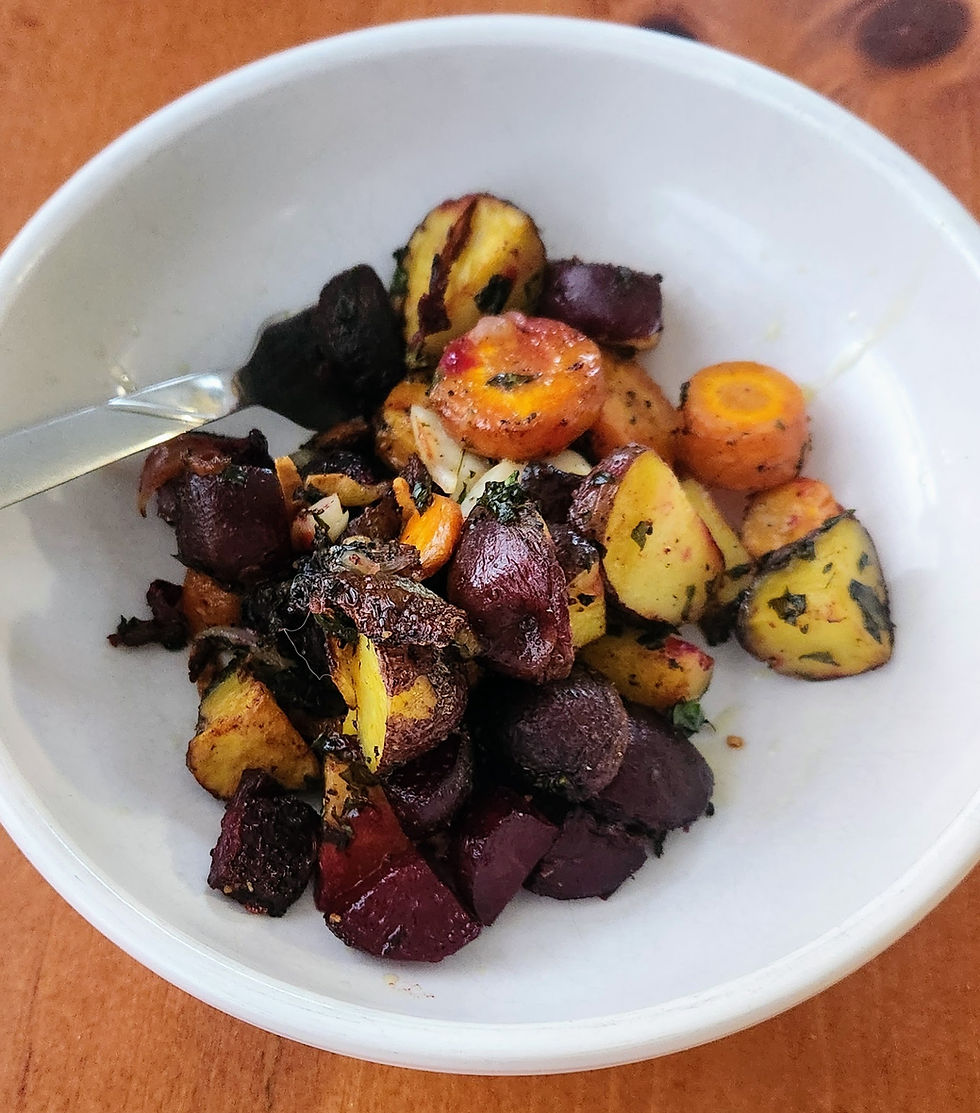
Roast beet wedges with ghee, cumin, and coriander.
Make beet, carrot, and ginger soup.
Add beets to borscht or a garden-root soup.
Fold cooked beets into lentil dal.
Blend roasted beets into hummus with tahini and garlic.
Make warm beet, celery, and avocado salad.
Add beets, greens, fennel, grains, and beans to seasonal bowls.
Prepare beet hash with potatoes, onions, and eggs.
Pair roasted beets with arugula, goat cheese, walnuts, or seeds.
Grate tender raw beets into slaw with carrots and fresh herbs.
Make refrigerator-pickled beets and onions.
Blend beets with tahini into a creamy dressing.
Add beet purée to pancakes, savory cakes, or flatbread dough.
Sauté beet stems and leaves with ghee, garlic, cumin, or green onions.
Add chopped stems to soups, beans, eggs, hashes, and stir-fries.
Blanch and freeze the greens for winter.
Pressure-can plain beets for neutral shelf-stable storage.
Use a tested recipe to can sweet or spiced pickled beets.
Dehydrate cooked beet slices for soup additions or beet powder.
A beet asks us to look at abundance differently. What first appears to be one familiar root vegetable is really a collection of flavors, textures, and possibilities growing together in the same plant.
The root grounds. The stems bring color and texture. The leaves lighten and nourish.
Three vegetables, one seed, and very little that needs to be wasted.
Explore recipes with
Beets




.jpg)


How This Food Supports the Body
These functional categories highlight the primary ways this food or herb supports balance in the body. In Ayurveda, foods are not only nourishment — they also have specific actions that can influence digestion, the nervous system, hormones, immunity, and more.