
Embracing the Vata Season: An Ayurvedic Guide to Autumn Balance

As the vibrant, fiery intensity of summer begins to cool, nature transitions into the crisp, dynamic energy of autumn. According to Ayurveda, the ancient Indian system of medicine, this season is primarily governed by the Vata dosha. Understanding the qualities of Vata allows us to consciously adjust our diet and lifestyle to find balance and thrive during this time of transformation.

The Qualities of Autumn: Vata Dosha
Vata is comprised of the elements of Air and Ether (Space). Just as we observe in nature, these elements manifest as a distinct set of qualities, or gunas, in the autumn environment and within our bodies and minds:
Dry: The air becomes dry, often leading to dry skin, hair, and internal dryness like occasional constipation.
Light: The days feel shorter, and the energy can feel light, scattered, and ungrounded. This lightness often shows up in the body and mind as anxiety and insomnia, making it difficult to find rest and stability.
Cold: The temperatures drop, making us feel cold, especially in the extremities.
Mobile (Erratic): The wind picks up, mirroring a tendency toward restlessness, racing thoughts, and irregular appetite or sleep patterns.
Rough: The wind and cold can make the skin feel rough, and the mind can become easily agitated.
Subtle/Clear: This quality can manifest as mental clarity but also a feeling of being ungrounded or spacey.
Since "like increases like" in Ayurveda, an abundance of these qualities in the environment can easily aggravate Vata in our constitution, leading to common autumn imbalances like anxiety, insomnia, dry skin, gas, and bloating. The key to harmony lies in balancing Vata with its opposites: Warmth, Heaviness, Moisture, and Stability.
Finding Balance: Diet, Lifestyle, and Herbs
The guiding principle for an Ayurvedic autumn is grounding, nourishment, and warmth.
1. Diet: Warmth, Moisture, and Substance
To pacify Vata, focus on foods that are warm, grounding, moistening, and easy to digest.
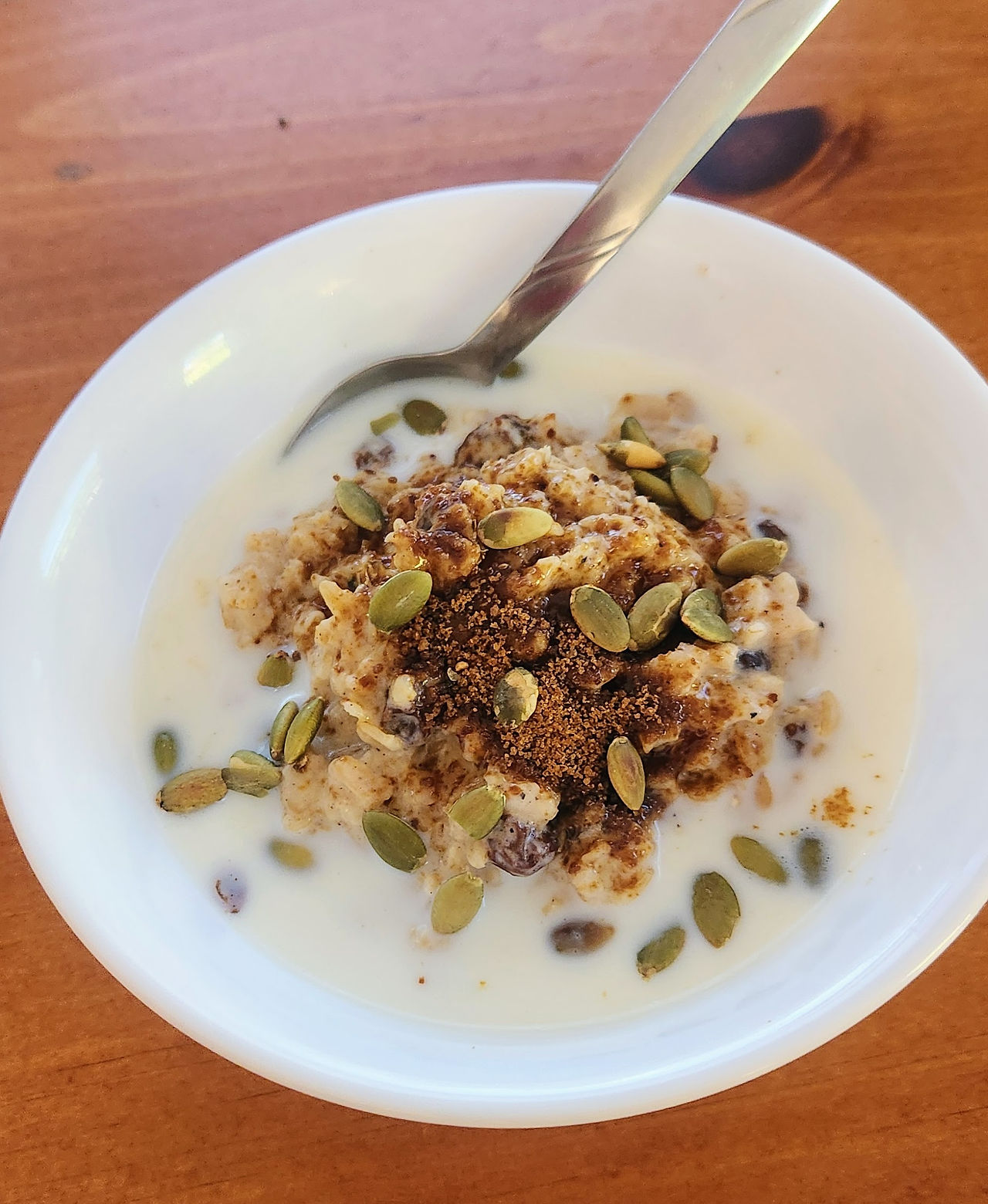
Favor Warming, Cooked Foods: Emphasize thick soups, stews, whole grains like cooked oats and rice, and slow-cooked root vegetables (squash, sweet potatoes, carrots, beets), and cooked apples. Avoid excessive raw foods, salads, and cold beverages, as these aggravate Vata's cold and light qualities.
Increase Healthy Fats: Healthy fats are essential to counter Vata's dryness. Incorporate ample ghee (clarified butter), olive oil, sesame oil, and nourishing foods like avocados and soaked nuts.
Discover the advantages and preparation methods of ghee here. Ghee is my preferred choice of oil.
Pacifying Tastes: The tastes that balance Vata are Sweet, Sour, and Salty.
Sweet: This taste helps to build tissues and provides a sense of substance and grounding. Excellent choices include naturally sweet vegetables (squash, sweet potatoes, carrots, beets), cooked fruits (apples, pears, bananas), grains (oats, rice, quinoa), and natural sweeteners like maple syrup, honey, and jaggery. For those who consume them, well-cooked meat, eggs, and dairy are also considered sweet and grounding options that can help balance Vata.
Sour: The sour taste stimulates a healthy appetite and helps to cleanse and moisten the body. Lemon, lime, cooked cranberries, and a small amount of high-quality yogurt.
Salty: A moderate amount of natural mineral salt is recommended, as the salty taste helps to retain moisture and promotes grounding, countering the dryness and light qualities of Vata.
Use Warming Spices: Warming spices help kindle Agni (digestion fire) and counter the cold. Stock your pantry with ginger, cinnamon, cardamom, nutmeg, cumin, and turmeric.
Check out my recipes page, where you can filter by dosha, season, and taste to discover balancing recipes for Autumn/Vata.


2. A Powerful Tool: Routine and Grounding
Daily Self-Massage (Abhyanga): The quintessential Vata-pacifying ritual. Before your shower, warm a generous amount of sesame oil or almond oil and massage it into your entire body. This grounds the nervous system, lubricates the joints, and moisturizes the skin, counteracting Vata's dry, rough, and mobile nature. As an Ayurveda Practitioner, I offer Abhyanga and other body treatments. I invite you to book a session with me this fall.
Discover the advantages of Abhyanga here:
Gentle Movement: Avoid exhaustive exercise. Focus on slow, gentle, and grounding activities like Hatha yoga, Tai Chi, gentle walking, or swimming. To further explore these practices and receive guidance, you can join my 4-week Rooted In Autumn Yoga series. This program is designed to help you navigate the season's transition with grace and inner equilibrium. Through gentle movement, grounding meditations, and intentional practices, the series provides a stable foundation to counteract Vata's light and mobile qualities. It's a wonderful way to embody the principles discussed here and bring them into your daily life.
Prioritize Sleep: Aim to be in bed by 10 PM. Vata is aggravated by staying up late, leading to a sense of exhaustion and burnout. Wind down with warm, spiced milk (often called Golden Milk or Moon Milk) and a few minutes of quiet reading or meditation.
Keep Warm: Protect yourself from the wind and cold. Dress in layers, wear a hat and scarf when outdoors, and use warm blankets.
3. Herbs for Vata Balance
Herbs offer deep nourishment and vital support for the nervous system during Vata season.
These are a few key herbs to consider:
Ashwagandha: A renowned rasayana (rejuvenative) herb. It is an excellent adaptogen that grounds the nervous system, calms the mind, and supports healthy sleep—perfect for Vata-type anxiety and restlessness.
Triphala: This classic formula gently cleanses and tones the digestive tract, supporting regular elimination, which is key to Vata balance.
Ginger: Excellent for stimulating Agni (digestion fire) and providing internal warmth. Enjoy fresh ginger tea throughout the day.
Chyavanprash: A potent, jam-like herbal tonic, primarily made with Amla (Indian gooseberry), used to build immunity and deeply nourish the tissues. A fantastic general tonic for the colder months.
By honoring the qualities of the Vata season and consciously choosing opposites—warmth over cold, oiliness over dryness, stability over mobility—you can navigate the autumn transition with grace, maintaining your inner equilibrium as the world outside shifts. Embrace the cozy comforts of the season, and let the wisdom of Ayurveda guide you to a well-grounded and nourished fall.
Ready to feel more balanced and aligned this fall? Book a full or mini health consultation with me to create a personalized plan just for you.
I hope this guide helps you feel more balanced and at ease this season. For a truly personalized approach to your well-being, I invite you to explore my Rooted In Autumn Yoga series or schedule a full or mini health consultation with me. I would be honored to guide you on your wellness journey.
With warmth and light,
Jennifer


Comments