
Fatty Liver Disease: When “Common” Becomes Normal (And Why That Should Concern Us)

Updated: May 11
Four years ago, almost to this exact season, I was sitting in a doctor’s office after a series of tests I hadn’t expected to need.
The conversation was brief.
The explanation even briefer.
“You have fatty liver disease,” she said.
Then came the sentence that stayed with me:
“Most people have it.”
Followed by,
“Make some diet and lifestyle changes.”
That was it.
I remember sitting in my car afterward, hands on the steering wheel, feeling a strange mixture of dismissal, fear, shame, responsibility… and empowerment.
Fear — because it’s your liver.
Shame — because as an Ayurvedic practitioner, I understood how this could happen.
Responsibility — because I knew my body had been whispering to me for some time.
That moment was more than a diagnosis — it became a turning point in how I understood my own health and the limitations of symptom-based care. I wrote more about that experience and how it reshaped my perspective in my earlier reflection on Ayurveda vs Western Medicine: A Personal and Holistic Perspective.
But more than anything, I felt unsettled by the normalization.
Common is not the same as healthy.
When did we begin accepting metabolic dysfunction as inevitable — as simply part of modern life?

The Part No One Talks About
Around that same time, I was working with a gentleman who had previously been diagnosed with fatty liver disease. He had been told something similar — that it was common and to “make lifestyle changes.”
There was no structured plan.
No specifics.
No follow-up.
Two years later, he was diagnosed with liver cancer.
I cannot say with certainty that his outcome would have been different.
Readiness matters.
Compliance matters.
Biology is complex.
But I do know this:
He deserved clearer guidance when there was still time.
And that realization stirred something protective in me.
When we normalize dysfunction, we remove urgency.
When we offer vague advice, we remove direction.
Early fatty liver disease (often labeled non-alcoholic fatty liver disease (NAFLD)) can, in many cases, improve significantly with targeted dietary and lifestyle changes. Research shows that even modest weight loss (5–10% of body weight), improved insulin sensitivity, increased fiber intake, and regular movement can reduce liver fat and inflammation in early stages.
The liver is one of the most resilient organs in the body. It has remarkable regenerative capacity when supported before advanced fibrosis or cirrhosis develops.
But people need specifics.
My Own Turning Point
My diet was mostly whole foods at the time. I wasn’t reckless. I wasn’t drinking heavily. But I had subtle, normalized habits that were burdening my system.
Emotional reaches.
Ultra-processed snacks — the entire bag of goldfish crackers in a day.
Stress.
Overwork.
A little alcohol.
Dense, heavy food combinations that were difficult to digest.
Nothing dramatic. Just quiet accumulation over time.
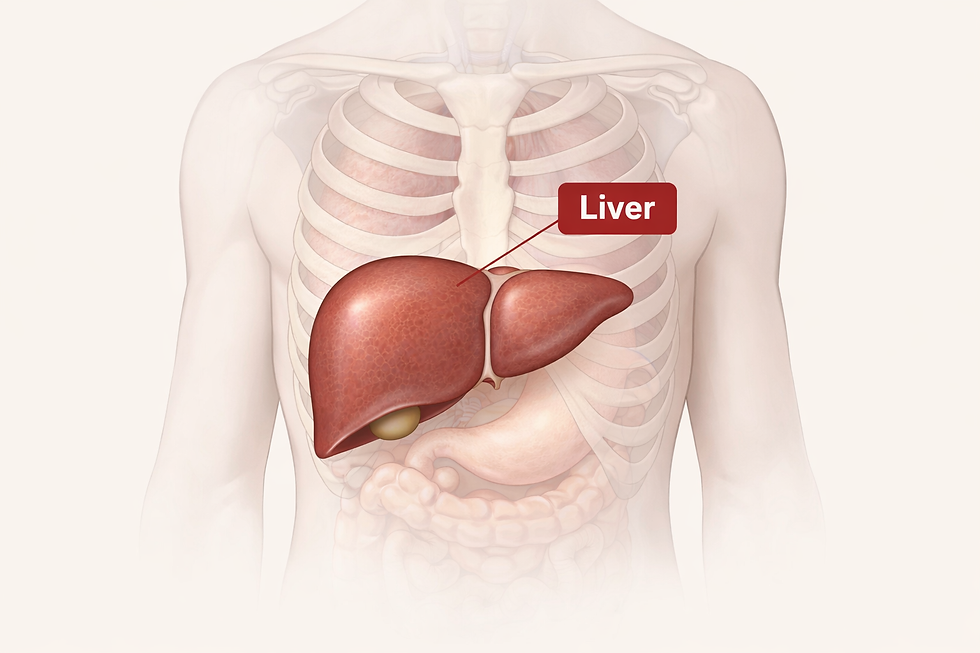
And physically, I had a persistent fullness and tenderness under my right rib — a sensation that can occur when the liver is inflamed or congested and its surrounding capsule becomes irritated.
The body whispers before it screams.
I didn’t overhaul my life.
I removed what was burdening it.
Over the next months I:
Eliminated ultra-processed foods (I am now about 98% free of them)
Reduced alcohol further
Increased daily walking
Leaned into seasonal spring greens — bitter, astringent, and pungent vegetables that support healthy bile flow and liver function
Simplified meals and improved food combining
Added bhumyamalaki and amalaki for liver support
Continued turmeric daily for its anti-inflammatory and hepatoprotective properties (I also share more about turmeric and other kitchen medicines in my Honey Trick for Brain Support article)
Used castor oil packs
Practiced yoga to move stagnation, improve circulation, and steady the nervous system
Recommitted to daily nourishment with healthy fats like ghee and supportive oils (I wrote more about this philosophy in my article Why Oil Is Medicine)
Spring made it easier. Greens were abundant. Movement felt natural. Ayurveda aligns beautifully with seasonal liver support — lightening, clearing, and reducing stagnation just as nature begins to thaw.

And something else happened.
The persistent fullness under my right rib gradually resolved.
I have never re-scanned out of curiosity.
What I do know is this:
My energy stabilized.
My digestion improved.
That heavy, congested sensation rarely returns — and when it does, I recognize it early and adjust.
Healing is not always proven by a scan.
Sometimes it is proven by how your body feels when you begin listening.
The Bigger Picture: Why Fatty Liver Is Rising
According to current public health data, fatty liver disease now affects nearly 1 in 3 adults in the United States, making it one of the most common chronic liver conditions worldwide. It is often labeled “non-alcoholic,” meaning alcohol is not the primary driver, yet metabolic and lifestyle factors still place significant burden on the liver.
Ultra-processed foods.
Refined carbohydrates and added sugars.
Chronic stress and elevated cortisol.
Blood sugar dysregulation.
Sedentary lifestyles.
Certain medications.
Sleep disruption.
All of these tax the liver.
The liver performs over 500 metabolic functions daily, including:
Hormone processing and detoxification
Blood sugar regulation
Bile production and fat metabolism
Cholesterol regulation
Storage of vitamins and minerals
Conversion of thyroid hormones
When liver function becomes sluggish or inflamed, the ripple effects extend to energy, hormones, mood, digestion, and metabolic health.
It is common.
But it is not optimal.
My frustration is not with medicine itself. Western medicine excels in acute care and crisis intervention. But metabolic dysfunction lives in the gray zone — not sick enough to trigger urgency, yet not healthy enough to support true vitality.
“Make lifestyle changes” without structure is not guidance.
People deserve:
Clarity
Specific, actionable steps
Education about reversibility in early stages
Monitoring and follow-up
Empowerment rather than dismissal
Signs Your Liver May Need Support
Many people assume liver disease appears suddenly, but the body often gives subtle signals long before serious dysfunction develops.
Some early signs of liver congestion or metabolic strain can include:
• A feeling of fullness or pressure under the right rib cage
• Digestive heaviness after rich or processed foods
• Increased fatigue or brain fog
• Skin breakouts or redness
• Difficulty tolerating alcohol or fatty foods
• Hormonal imbalance or sluggish metabolism
These signs do not necessarily mean disease is present, but they can be an invitation to listen more closely to the body and support liver function through diet and lifestyle.
A Practical Starting Point for Liver Health
If you have been told you have fatty liver, know this:
In many cases, early fatty liver disease can improve significantly with targeted dietary and lifestyle changes.
That does not require perfection.
It requires direction.
Start simply:
Remove or dramatically reduce ultra-processed foods
Reduce alcohol
Increase fiber-rich vegetables, especially bitter greens
Balance blood sugar with whole foods and protein
Move daily (walking alone has measurable metabolic benefits)
Improve sleep
Reduce chronic stress
Support digestion
And most importantly — listen.
Your body often signals congestion long before labs shift dramatically.
We do not need to wait for crisis.
Why This Matters to Me
I carry grief for the gentleman who did not get the guidance he needed.
I carry anger at the normalization of dysfunction.
But more than anything, I carry a protective instinct — for my clients, my family, my grandchildren, and anyone quietly walking around thinking, “Most people have it.”
Common is not the same as healthy.
The liver is resilient.
The body wants to heal.
We simply need to support it before the whisper becomes a scream.
I also want to acknowledge that many physicians genuinely care and are working within a healthcare system that often has limited time for deeper lifestyle conversations. In my own experience, later discussions with my current doctor were supportive and reassuring. My intention in sharing this story is not to criticize individuals, but to highlight how important it is for patients to receive meaningful guidance around diet, lifestyle, and prevention—areas where Ayurveda and yoga can beautifully complement modern medicine.
Frequently Asked Questions About Fatty Liver Disease
1. Can fatty liver disease be reversed?
In many early-stage cases, fatty liver disease can improve significantly with targeted dietary and lifestyle changes. Research shows that modest weight loss, improved insulin sensitivity, increased fiber intake, and regular movement can reduce liver fat and inflammation before advanced scarring develops.
2. What are early signs of fatty liver disease?
Many people have no obvious symptoms in early stages. Some may experience fatigue, metabolic changes, elevated liver enzymes on labs, or a sense of fullness or tenderness under the right rib cage when inflammation or enlargement is present.
3. Does fatty liver cause pain?
The liver tissue itself has few pain receptors, but when inflamed or enlarged it can stretch the surrounding capsule, leading to a dull ache, pressure, or tenderness in the upper right abdomen.
4. What causes non-alcoholic fatty liver disease (NAFLD)?
NAFLD is commonly associated with blood sugar dysregulation, insulin resistance, ultra-processed food intake, chronic stress, sedentary lifestyle, poor sleep, certain medications, and metabolic syndrome. Alcohol is not the only burden on the liver.
5. How can I support liver health naturally?
Foundational steps include reducing ultra-processed foods, balancing blood sugar with whole foods and protein, increasing fiber-rich vegetables (especially bitter greens), moving daily, improving sleep, reducing chronic stress, and working with a qualified provider for personalized guidance.
If You Want Support
If this resonates with you — if you’ve been told to “make lifestyle changes” but were never shown how — you do not have to navigate it alone.
This is the heart of my work.
Through personalized integrative Ayurvedic consultations, we look at your digestion, food patterns, stress load, sleep, lab history when available, and daily rhythms to create specific, realistic steps that reduce metabolic burden and support long-term liver health.
In my yoga classes, we focus on circulation, breath, lymphatic movement, and nervous system regulation — all essential pieces in supporting detoxification and metabolic resilience.
Seasonal experiences like my Spring Equinox Retreat are designed to realign the body with nature’s rhythms — incorporating movement, nourishment, and grounding practices that gently support the liver during its natural season of renewal.
And for those needing deeper physical support, body treatments such as Abhyanga, Vishesh, and Garshana can assist circulation, lymphatic flow, and systemic lightening when paired with appropriate lifestyle changes.
Healing does not require panic. It requires guidance, rhythm, and steady, consistent support.
If you are ready for clarity rather than vague advice, I would be honored to walk alongside you.
In good health,
Jennifer
Thank you for supporting JenZen Living and the free recipes, blogs, and Ayurvedic food education shared here. When you shop through Banyan Botanicals affiliate links, you help support the continued creation of free educational content for this community. I deeply appreciate your support.
This content is for general educational purposes only and is not intended to diagnose, treat, or replace medical care. Always consult your healthcare provider for personal medical guidance.



Comments