
Preserving More Than the Harvest

Zucchini, Summer Abundance & the Memories We Keep
Every summer, there comes a moment when zucchini stops feeling like a vegetable and begins to feel like a responsibility. 😆
CSA members open their shares to find three, four, or even five squash waiting for them. Gardeners walk outside certain there was nothing ready the day before, only to discover another zucchini hiding beneath the leaves—often already the size of a small child.

At the height of summer, Mimi’s Healing Garden was giving me close to five zucchini and summer squash a day. I eventually thinned a few plants because the squash jungle needed room to breathe, but not before my kitchen counters and refrigerator began filling quickly.
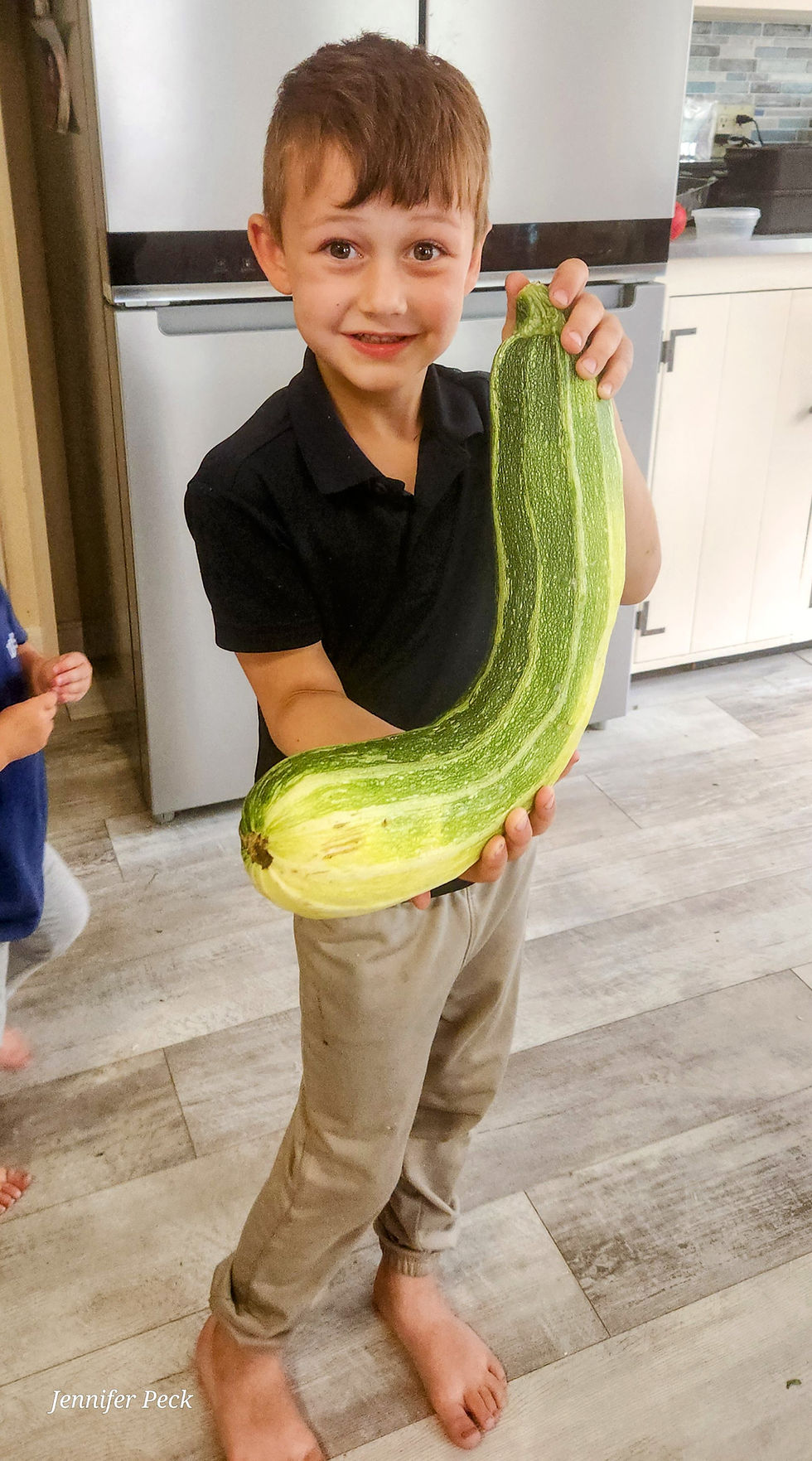
At Many Hands Organic Farm, Julie set aside an entire crate of oversized zucchini for me beside the wash table—the ones that had grown too large to offer customers. Jackson was particularly delighted by the “J monster zucchini,” which was nearly as big as he was.
What might appear to be too much, too large, or no longer useful became an opportunity.
And perhaps that is one of the lessons hidden within zucchini.
Why Does Zucchini Grow in Such Abundance?
A couple of years ago, I remember Julie wondering aloud why squash grows in such abundance.
I smiled but kept my thoughts to myself—which, admittedly, is something I have often done. I notice connections, tuck them away, and continue working.
But I am learning to share them.
Perhaps squash arrives in abundance because it asks us to become creative.
It teaches us that the season does not expect us to eat everything immediately. We can enjoy some now, preserve some for later, share some with another person, and discover possibilities we may not have considered before.
Abundance does not have to mean waste—or eating sautéed zucchini every day until we never want to look at another one again.
It can become nourishment for another season.

What Can I Do With All This Zucchini?
When zucchini begins filling the kitchen, my first advice is not to prepare all of it in the same way.
Choose some to eat fresh and some to preserve. Let each squash have a different purpose.
Eat Some Now
Zucchini and summer squash can be:
Sautéed with ghee or olive oil and fresh garden herbs
Added to stir-fries, soups, stews, omelets, and breakfast hashes
Shredded into fritters or zucchini–ricotta breakfast cakes
Roasted or grilled with herbs and spices
Blended into sauces, soups, or a garden broth base
Made into zucchini butter, relish, or refrigerator pickles
Large zucchini are not useless. If the skin has become tough, peel it. If the center is seedy, scoop it out. The remaining flesh is often perfect for shredding, soups, sauces, relish, or baking.
Preserve Some for Later
I have shredded zucchini and frozen it in portions for breads, soups, stews, and sauces.
Thin slices can be dehydrated into chips, while fully dried zucchini can be ground into powder and added to future meals.
Zucchini can also be:
Cubed or roasted and frozen for soups and cooked dishes
Prepared as refrigerator pickles or relish
Dehydrated for chips or vegetable powder
Shredded and frozen in measured portions
Cooked into sauces or soup bases and frozen
You do not need to spend an entire day canning or purchase expensive equipment. A few bags in the freezer, a jar of refrigerator pickles, and a tray in the dehydrator all count.
This is how I approach abundance: choose what to eat now and what to preserve.
Seasoned zucchini slices ready to become chips, with jars of dill zucchini pickles nearby—two simple Shredded zucchini prepared for dehydrating. Once completely dry, it can be ground into powder and ad Jars of dill zucchini refrigerator pickles turn summer abundance into something crisp, flavorful, an
Food Education Without a Lesson Plan
On one of our preserving days, my kitchen counters were covered with snap peas, zucchini, bowls, cutting boards, and freezer bags.
Jackson stood beside me, as he has so many times over the years, ready to help.
He prepared snap peas for blanching and freezing, then used a real knife for the first time to cut zucchini. He was careful, focused, and proud of himself. I shredded the pieces for meals we would enjoy long after the garden had gone to sleep.

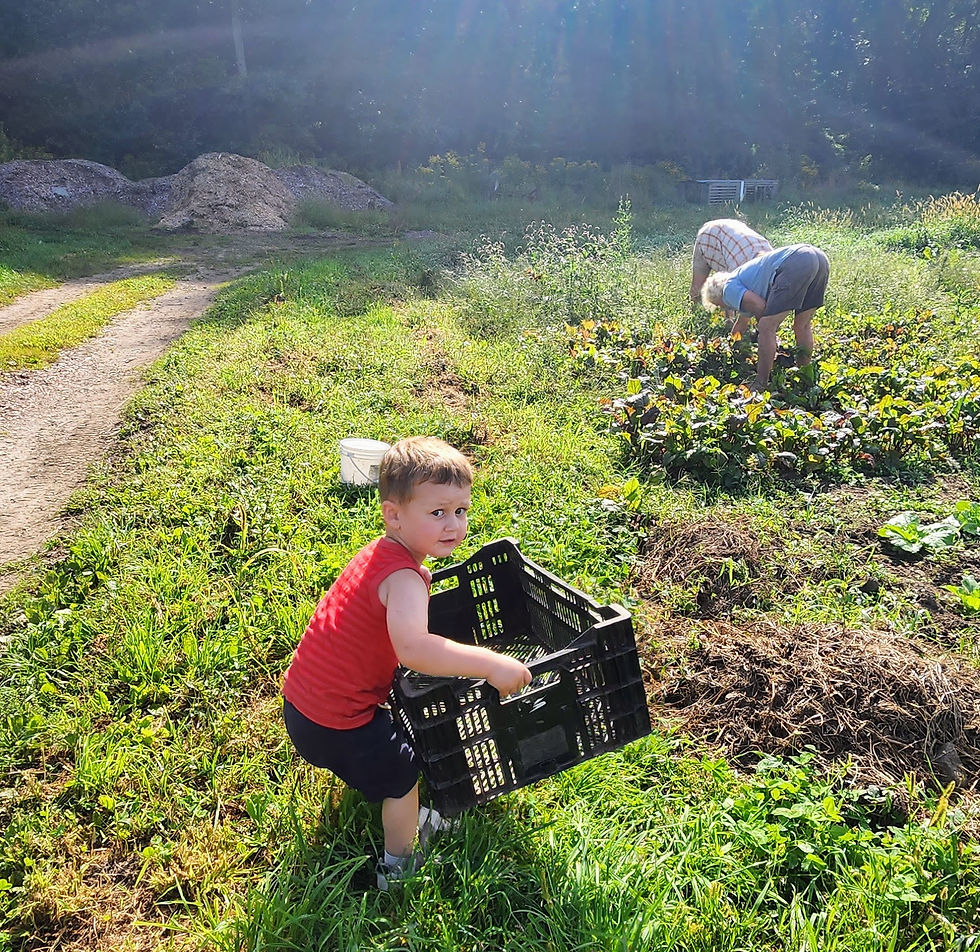
Jackson has spent years helping me wash, harvest, chop, cook, and preserve food. His weekly job in the summer is to carry compost to the garden, shelled popcorn grown by a local farmer, helped make kale chips, picked snap peas for lunch, and carried that enormous J monster zucchini.
He doesn’t simply watch me work in the kitchen or garden. He participates.
Somewhere along the way, without either of us naming it, he has learned that food does not begin in a grocery store.
My classroom has always been outside.
Nature kept me sane and nourished throughout my own childhood, long before I had words for what it was giving me. Now the garden, the farms, and my kitchen have become classrooms for my grandchildren too.
The lessons rarely look formal.
They are learning how to hold a knife safely, how to snap the ends from a bean, and how vegetables can be eaten minutes after harvesting or preserved for another season. They are learning patience, responsibility, creativity, and respect for the people and land that grow our food.
They are also learning that a giant zucchini a farmer cannot sell still holds value.

Ten Pounds of Beans and One Official Sealer
Zucchini was only part of our preserving season.
Over two weeks, we also prepared and preserved ten pounds of green beans for winter.

Jackson sat at the kitchen table snapping the ends while an enormous pile waited between us.
Even Madelyn, who had shown considerably less enthusiasm for my preserving projects, eventually found a job that interested her: official vacuum-bag sealer. 😆
Standing on her little chair, she pressed the buttons and watched closely as the air disappeared from around the beans. She may not have wanted to snap ten pounds of them, but operating the machine was apparently an important responsibility.
These are ordinary moments. Bowls scattered across the table. Bean ends collecting beside small hands. Vegetables covering every available surface. Children who sometimes help willingly and sometimes need a very specific job before they become interested.
Yet these are the moments I know I will remember.
Preserving Seasons
With Jackson preparing to begin kindergarten, the familiar rhythm of our days together is changing.
I know this is exactly what he is supposed to do. He is growing, learning, and stepping into his own life. Still, I am going to miss my little helper.
For years, he has been part of my weekdays: garden walks, cooking projects, trips to the farm, vegetables scattered across the kitchen, and questions asked while my hands were busy.
Perhaps that is why these preserving days have felt especially tender.
As we prepared food for the freezer, I realized I was trying to preserve something else too.
This summer, we preserved zucchini, snap peas, kale, and ten pounds of green beans.
But when I look at the photographs of Jackson and Madelyn sitting at my kitchen table—small hands working, bowls surrounding them, and an enormous pile of beans waiting between us—I realize that food is only part of what I am trying to preserve.
I am preserving a season.
The garden harvests and farm abundance. Jackson carefully learning to use a knife. Madelyn proudly pressing the button on the vacuum sealer. The conversations, the laughter, the mess, and even the moments when keeping little helpers focused requires more patience than simply doing the work myself.
Months from now, when I pull a bag of shredded zucchini from the freezer for a winter soup, I may remember Jackson’s small hand carefully holding that knife. When I open one of our vacuum-sealed bags of beans, I may see Madelyn standing on her chair, taking her official job very seriously.
The food will nourish us later, but these moments are nourishing us now.
These are memories I know I will cherish. I hope that somewhere within them, the children will carry these days forward too. Perhaps years from now, the sound of a vacuum sealer, a bowl filled with beans, or the first zucchini of summer will bring them back to Mimi’s kitchen—and remind them that they were part of it all.
Maybe preserving the harvest has never been only about saving food.
It is about honoring what the season has given us—the farmers, the garden, the abundance, the lessons, and the people standing beside us in the kitchen.
Some things go into freezer bags and jars.
Some become part of who we are.
When Zucchini Is Abundant
If zucchini is filling your kitchen counters too, visit the zucchini entry in The JenZen Living Food Guide for seasonal nourishment, preparation, storage, preservation, and more ideas for using the abundance.
May this season remind us that abundance is not only something to use up or manage. It is an invitation to become creative, share what we have, and notice who is standing beside us.
Preserve what you can for another season—but don’t forget to preserve the moments nourishing you now.
With love,
Jennifer


Jenn, thank you so much. Funy thing is I have a dehydration machine and I never use it. Guess it is time to pull it out and dust it off and make some Zucchini chips. I also found a wonderful healthy recipe for Chocolate Zucchini cake. Thank you my friend. And ps...your grandchildren are absolutely precious, what a wonderful foundation in health and wellness they are learning. ❤️ Ally
This post is filled with love.